behind
1 《장소》 …의 뒤에, 뒤쪽에( in front of). ⇒ AFTER .
a garden behind the house 집 뒤에 있는 정원.
She closed the door behind her. 그녀는 뒤쪽의 문을 닫았다.
behind와 at the back of ─
의미와 용법에 차이가 거의 없으나, 격식을 차리는 문장에서는 behind가 더 많이 쓰이고, 《구어》에서는 at the back of가 자주 쓰인다. 특히 《美구어》에서는 back of로만 쓰는 경우가 많다: I’ll put it back of the counter here. 그것을 이 카운터 뒤에 놓아두겠어요.
2 《위치》 …에 이어서, …을 뒤따라. ahead of
The boy followed close behind his mother. 소년은 어머니의 뒤를 바짝 따라갔다.
3 《경과》 (죽거나 떠나거나 하여) …의 뒤에 (남기고)(*보통 leave, stay, remain 따위와 함께 쓴다).
stay behind the others 딴 사람들이 가고 난 뒤에도 머물러 있다.
He left three children behind him. 그는 세 아이를 남기고 갔다[죽었다].
{시간} (정시에) 늦어서.
You are behind the appointed time. 너는 약속 시간보다 늦었다.
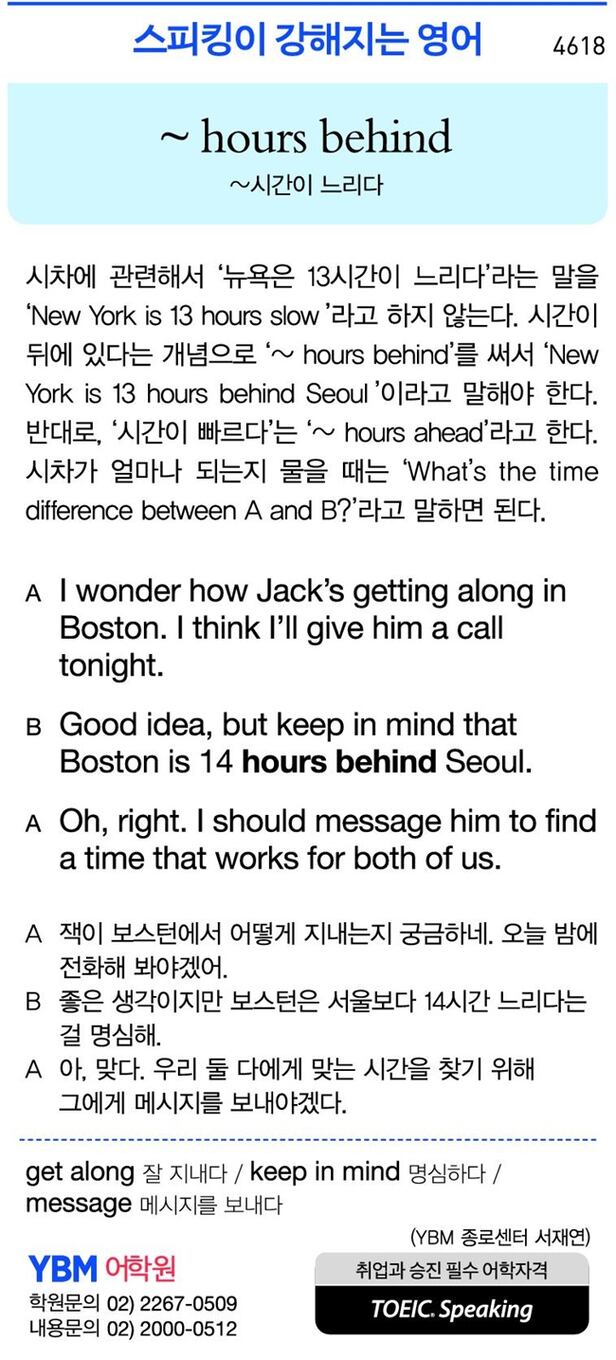
{열등} (진보, 능력 따위가) …보다 뒤져서[못하여](in); (시합 따위에서) (…만큼) …에게 져서(by).
* She is behind the other in mathematics. 그녀는 수학에서 딴 사람들보다 뒤(쳐)진다.
* Technology in Eastern Europe was at least 20 years behind the West. 동유럽의 과학 기술은 서방 제국에 적어도 20년 뒤져 있었다.
☆ be way behind 한참 뒤처지다.
* After being sick for a week, I was way behind the others. 한 주간 아픈 이후로 나는 남들보다 한참 뒤처졌다.
☆ well behind 한참 못 미치는, 뒤떨어진.
* The pair had been replaced by a volunteer flag bearer in the opening ceremony. In competition, Rasouli competed in the long jump after missing his preferred event, the 100 meters, and finished 13th and last, well behind the 12th-place finisher.
…의 저쪽에, …너머로(beyond).
The sun has sunk behind the mountain. 해가 산 너머로 졌다.
7 《구어》 …의 배후에; …을 지원[지지]하여; …을 조종[운전]하여.
behind the wheel of a car 운전석에 앉아, 차를 운전하여.
8 …의 그늘[뒤]에 (숨어); …으로[…에] 숨겨져[감추어져]; …의 원인이 되는.
the story behind the story 소문 뒤에 숨겨져 있는 이야기.
Malice lay behind her smile. 그녀의 미소 뒤에는 악의가 숨어 있었다.
He has the president behind him. 그에게는 사장이 배후에 있다.
9 …에게 지나간 (일인), (이미) 끝난.
His apprenticeship was behind him. 견습 시절은 그에게는 옛날 일이었다.
☑️ 숙어
behind a person’s back ⇒ BACK¹ .
behind it 《美속어》 ① 관계가 있어; 열중하여. ② 알아채고, 이해하고.
behind schedule 예정[정시]보다 늦게.
behind (the) bars 투옥되어, 옥중에(서).
behind the mahogany[or stick, wood] 《美속어》 바텐더(bartender)를 하며.
behind the scenes[or play] ⇒ SCENE.
☆ behind the times 시대[유행]에 뒤(떨어)져.
A: Hey, Jane. How was your weekend?
B: Hi, Tom. It was not bad, though. Actually, I had a blind date on last Sunday.
A: Oh, how was your blind date? Was he ok? I mean, was he your Mr. Right?
B: Hmmm, Tom…. He was all right even though his style was behind the times(fashion). I'm thinking whether I'll see him again or not now.
A: Good luck, Jane I hope you have a right decision on him.
A: 안녕 제인. 주말 어떻게 보냈어?
B: 안녕, 탐. 그럭저럭 괜찮게 보냈어. 사실, 저번 일요일에 나 소개팅 했거든.
A: 오, 소개팅 어땠어? 상대는 괜찮았어? 내말은 네 이상형이었어?
B: 흠, 탐…. 나쁘진 않았어, 비록 스타일이 조금 유행에 뒤떨어지지만. 계속 만날지 지금 생각 중이야.
A: 행운을 빌게, 제인. 그에 대해 너에게 좋은 결정을 하길 바랄게.
☆ behind time ⇒ TIME.
☆ Behind you! 뒤를 봐, 위험해!
☆ get behind ⇒ GET.
☆ go [look] behind someone's words ...의 말의 진의(眞意)를 캐다.
* When listening to a politician's speech, it's essential to go behind their words and analyze their true intentions. 정치인의 연설을 들을 때에는 그들의 말 뒤에 숨겨진 진실을 파악하는 것이 중요합니다.
* As an investigator, it's your job to go behind the suspect's words and find the truth. 수사관으로서, 범인의 말 뒤에 있는 진실을 찾는 것이 당신의 업무입니다.
* It's always wise to go behind the salesman's words and thoroughly research the product before making a purchase. 구매 결정 전에 판매원의 말 뒤에 숨은 진실을 파고들고 제품을 철저히 조사하는 것이 항상 현명합니다.
* In a negotiation, you need to go behind the other party's words to understand their true position and interests. 협상에서는 상대방의 말 뒤에 있는 진정한 입장과 이해관계를 이해해야 합니다.
* Don't take everything at face value; go behind their words to comprehend the underlying motives. 모든 것을 단순히 받아들이지 마세요. 그들의 말 뒤에 숨은 동기를 이해해야 합니다.
* Journalists have a responsibility to go behind the official statements and uncover the real story. 언론인들은 공식적인 발표 뒤에 있는 진짜 이야기를 파헤치는 책임이 있습니다.
* In a dispute, it's essential to go behind the opponent's words and try to empathize with their perspective. 분쟁에서는 상대방의 말 뒤에 숨은 진실을 파악하고 그들의 시각을 이해하는 것이 중요합니다.
* As a counselor, you need to go behind the client's words and uncover their deeper emotions and concerns. 상담사로서, 고객의 말 뒤에 있는 감정과 걱정을 파악해야 합니다.
* To understand a literary work fully, it's necessary to go behind the author's words and grasp the underlying themes and symbolism. 문학 작품을 완전히 이해하기 위해서는 작가의 말 뒤에 있는 주제와 상징성을 파악하는 것이 필요합니다.
* When faced with uncertainty, it's crucial to go behind your friend's words and offer them support and understanding. 불확실함에 직면했을 때, 친구의 말 뒤에 숨은 진정한 의미를 파악하고 그들에게 지원과 이해를 제공하는 것이 중요합니다.
☆ put (something) behind (someone) (사물)을 고려하지 않다; (불쾌한 일 따위)를 잊어버리다, ...을 뒤로 하다.
* I put the plan entirely behind me. 나는 그 계획에 대해 전혀 생각하지 않았다.
* Put today behind us. 오늘 일은 잊어버리자.
* We can this whole nasty episode behind us. 이 더러운 일을 다 잊어버리자.
* Can't we just put this behind us? 우리 이걸 잊을 수는 없을까?
━
1 《위치》 뒤에, 후방에( in front, ahead, 《고어》 before); 뒤에 (놓아[남겨] 두고).
attack a person from behind 남을 뒤에서 공격하다.
leave the bag behind 백을 잊어버리다[놓아 두고 오다].
(집세·세금 따위가) 밀려서, 미납하여(in, with).
* be behind in [with] one’s rent 집세가 밀려 있다.
* I'm behind on my credit card payments. 카드 대금이 밀려 있다.
3 《시간》 (시계 따위가) 늦어서.
The clock is more than five minutes behind. 그 시계는 5분 이상 늦다.
(일, 진보 따위가) 뒤져서, 뒤처져서(in, with); 못하여, 뒤떨어져서.
* be behind with one’s work 일이 밀려 있다.
* a special class for children who are behind 지진아들을 위한 특별 학급.
A: Why did you come home so late?
B: I had to stay at the office. I'm behind in my work.
A: 왜 이렇게 늦게 들어오셨어요?
B: 사무실에 남아 있어야 했지. 일이 밀려 있거든.
지나가 (버려).
* My joy lies behind. 내 기쁨은 이제 지나가 버렸다.
6 《비유적》 배후에, 그늘에, 숨겨져.
Is there anything behind? 배후에 뭔가 사정이 있는 거야?
7 《고어》 (지금부터 앞으로) 다가와, 아직 실현되지 않아, 남아 있어.
☆ come (up) from behind 추월해서 1위로 들어오다; 역전승하다.
☆ lag [drop, fall] behind 뒤(처)지다.
* He fell behind in the race. 그는 경주에서 뒤처졌다.
☆ leave ... behind …을 놓아둔 채 잊고 오다; (사람)을 뒤에 남기다.
* leave a person behind (자기가 먼저 떠나) 남을 뒤에 남기다
* She left her books behind. 그녀는 책을 놔두고 왔다.
* He left all the other runners behind. 그는 다른 선수들을 모두 따돌렸다.
☆ look behind 뒤돌아보다; 회고하다.
☆ stay[or remain] behind 뒤에 남다, 출발하지 않다.
━ 《명사 뒤에서》 뒤의, 후방의; 배후의, 그늘의.
the person behind 뒤에 있는 사람.
━
1 (윗옷 따위의) 등.
2 《구어·완곡적》 엉덩이(buttocks).
fall on one’s behind 엉덩방아를 찧다.
sit on one’s behind 《구어》 농땡이 부리기로 작정하다.
tan a person’s behind 《구어》 남의 볼기를 치다.