lucky 1
(luck·i·er; luck·i·est)
(사람이) 운이 좋은, 행운의.
* be lucky enough to avoid the danger 운좋게 위험을 면하다.
* How lucky you are to have survived! 살아남다니 당신은 참으로 운이 좋군요!
* We’ve been lucky so far. 우린 지금까지 정말 운이 좋았어.
* I’m very lucky to have a neighbor like you. 너 같은 이웃이 있으니 난 정말 행운아야.
* I always knew I was lucky to have a mom who cared so much. 늘 느꼈던 거지만 날 무척 사랑해 주셨던 어머니가 계셨다는 게 난 정말 운이 좋았던 거야.
* I am lucky you are my friend. 네가 내 친구여서 난 운이 좋은 거야.
* I am lucky I called her. 내가 그녀에게 전화를 했었기때문에 행운이다.
* You are lucky I am your wife. 당신은 운이 좋은거야 내가 당신의 아내라서.
* I am lucky I called her. 내가 그녀에게 전화를 했었기때문에 행운이다.
* You are lucky I am your wife. 당신은 운이 좋은거야 내가 당신의 아내라서.
A: This trip to Greece has been amazing.
B: Yes, and the weather has been really good, right?
A: We've been pretty lucky. I hope our luck continues in Turkey.
B: What time is our flight to Istanbul?
A: At 9 a.m., so we'd better get to bed early tonight.
B: Alright. Have a good night.
A: 이번 그리스 여행은 끝내줬어.
B: 맞아, 그리고 날씨도 정말 좋았어, 그치?
A: 우리 운이 아주 좋았어. 터키에서도 운이 계속되면 좋겠다.
B: 이스탄불 비행기가 몇 시지?
A: 아침 9시, 오늘 밤에는 일찍 자는 게 좋겠다.
B: 좋아. 잘 자!
A: Oh, my. I'm so excited to see BTS concert!
B: So am I! We were really lucky to get the tickets.
A: We still have firve hours left. Let's go get some merch.
A: 이런 세상에. BTS 콘서트를 보게 되어서 정말 신난다.
B: 나도 그래! 표를 구할 수 있었다니 우리 정말 운이 좋았어.
A: 아직 다섯 시간이나 남았네. 가서 굿즈 좀 사자.
B: So am I! We were really lucky to get the tickets.
A: We still have firve hours left. Let's go get some merch.
A: 이런 세상에. BTS 콘서트를 보게 되어서 정말 신난다.
B: 나도 그래! 표를 구할 수 있었다니 우리 정말 운이 좋았어.
A: 아직 다섯 시간이나 남았네. 가서 굿즈 좀 사자.
☆ be lucky enough to do something 운 좋게 ...하다.
* I was lucky enough to get a reservation. 나는 운 좋게 예약을 할 수 있었다.
* Abandoned dogs, no matter how young they are, have to be euthanized if no one adopts them during the notice period. Even if they are lucky enough to be rescued, larger dogs aren't easily adopted in Korea, so most of them are adopted oversea. 유기견들은 아무리 어린 강아지라도 공고 기간 내에 아무도 입양해 가지 않으면 안락사를 당하게 됩니다. 운이 좋게 구조가 된다고 해도, 대형견들은 국내 입양이 쉽지 않아서 대부분 해외로 입양을 가게 됩니다.
* I was lucky enough to get one of the last tickets. 나는 운 좋게 마지막 남은 표 중 한 장을 구할 수 있었다.
* I was lucky enough to get front-row seats for the concert. 나는 운 좋게도 콘서트의 맨 앞자리를 얻었다.
* She was lucky enough to meet her favorite actor at the event. 그녀는 운 좋게도 행사에서 좋아하는 배우를 만났다.
* We were lucky enough to find a parking spot near the entrance. 우리는 운 좋게도 입구 근처에 주차 공간을 찾았다.
* He was lucky enough to win a scholarship for his studies abroad. 그는 운 좋게도 해외 유학을 위한 장학금을 받았다.
* They were lucky enough to escape the heavy traffic and arrive on time. 그들은 운 좋게도 교통체증을 피해서 제시간에 도착했다.
* I hope to be lucky enough to visit Paris someday. 언젠가 파리를 방문할 운이 있기를 바란다.
* She was lucky enough to find a rare book at a secondhand shop. 그녀는 운 좋게도 헌책방에서 희귀한 책을 발견했다.
* We were lucky enough to get a last-minute reservation at the famous restaurant. 우리는 운 좋게도 유명한 레스토랑에 막판 예약을 할 수 있었다.
* He was lucky enough to recover quickly from his illness. 그는 운 좋게도 병에서 빠르게 회복했다.
* The hikers were lucky enough to spot a rare bird in the forest. 등산객들은 운 좋게도 숲에서 희귀한 새를 보았다.
☆ be lucky to do [be something] 운 좋게 ⋯하다[⋯이다], ⋯하다니[⋯라니] 운이 좋다
* I was lucky to catch the last train home. 나는 마지막 기차를 운 좋게 탈 수 있었다.
* She’s lucky to have such supportive friends around her. 그녀는 그렇게 응원해주는 친구들이 있어서 운이 좋다.
* We were lucky to find a table at the busy restaurant without a reservation. 우리는 예약 없이 붐비는 레스토랑에서 자리를 찾을 수 있어서 운이 좋았다.
* He’s lucky to have survived such a serious accident. 그는 그렇게 심각한 사고에서 살아남았다니 운이 좋다.
* You’re lucky to live in such a beautiful neighborhood. 당신은 그렇게 아름다운 동네에 산다니 운이 좋네요.
* They were lucky to witness the rare solar eclipse. 그들은 드문 일식 현상을 목격하다니 운이 좋았다.
* I feel lucky to be part of such an amazing team. 나는 이렇게 멋진 팀의 일원이 되어 운이 좋다고 느낀다.
* We’re lucky to have a sunny day for our outdoor event. 우리는 야외 행사를 위한 맑은 날씨를 맞다니 운이 좋다.
* He was lucky to get the job despite tough competition. 그는 치열한 경쟁에도 불구하고 그 직업을 얻다니 운이 좋았다.
* She’s lucky to have such a loving family. 그녀는 그렇게 사랑이 넘치는 가족을 가지다니 운이 좋다.
☆ get lucky
1. 운 좋게 잘되다, 운이 좋아지다, 운이 따르다
* If you get lucky, you can find the same one at a lower price. 운 좋으면, 똑같은 걸 싸게 살 수 있어.
* I think he just got lucky. 그가 단지 운이 좋았을 뿐인 것 같다.
* I can't believe I got lucky and found a parking spot right in front of the restaurant. 나는 운 좋게 식당 바로 앞에 주차 자리를 찾았다니 믿을 수가 없다.
* She got lucky in the game and won the grand prize. 그녀는 게임에서 운 좋게 대상을 받았다.
* We got lucky with the weather on our hiking trip; it didn’t rain at all. 우리는 하이킹 여행 중 날씨가 운 좋게 맑아서 비가 전혀 내리지 않았다.
* He got lucky with his investments and made a lot of money. 그는 투자에서 운 좋게 잘 되어 많은 돈을 벌었다.
* I got lucky and managed to catch the last train home. 나는 운 좋게 마지막 기차를 타고 집으로 돌아갈 수 있었다.
* They got lucky and found a last-minute ticket to the concert. 그들은 운 좋게 콘서트의 막판 티켓을 구했다.
* I didn’t study for the test, but somehow I got lucky and passed. 나는 시험을 위해 공부하지 않았지만, 어떻게든 운 좋게 합격했다.
* We got lucky and were able to book a table at the restaurant without a reservation. 우리는 운 좋게 예약 없이 그 식당에서 자리를 잡을 수 있었다.
* She got lucky with the weather and had a perfect day for her outdoor wedding. 그녀는 날씨가 운 좋게 좋게 풀려 야외 결혼식을 완벽하게 할 수 있었다.
* I didn’t expect to win, but I got lucky and pulled ahead in the final round. 나는 이길 거라 예상하지 않았지만, 운 좋게 마지막 라운드에서 앞서 나갔다.
A: How are Cathy and Larry, Jr.? I bet he’s big now.
B: He’s growing fast.
A: Is he looking more like you now, or did he get lucky?
B: He’s got Cathy’s looks and my strong back. You should feel his grip.
A: 캐씨와 래리는 잘 지내니? 래리 많이 컸겠다.
B: 쑥쑥 자라지.
A: 너 닮았니? 아니면 다행히 집 사람을 닮았니?
B: 집 사람의 외모를 닮았지만 나처럼 힘은 좋지. 손으로 쥐는 힘이 얼마나 센지 한 번 잡아 보면 알아.
2. (처음 만난 이성 등과) 섹스를 하다
☆ I was lucky that ...한 건 행운이었어.
* I was lucky that I had so many great people around me. 내 주변에 좋은 사람들이 많았던 걸 보면 난 운이 좋았어.
* I was lucky that my ex wasn't there. 전 애인이 거기 없어서 운이 좋았어.
* I was lucky that I had so many great people around me. 내 주변에 좋은 사람들이 많았던 걸 보면 난 운이 좋았어.
* I was lucky that my ex wasn't there. 전 애인이 거기 없어서 운이 좋았어.
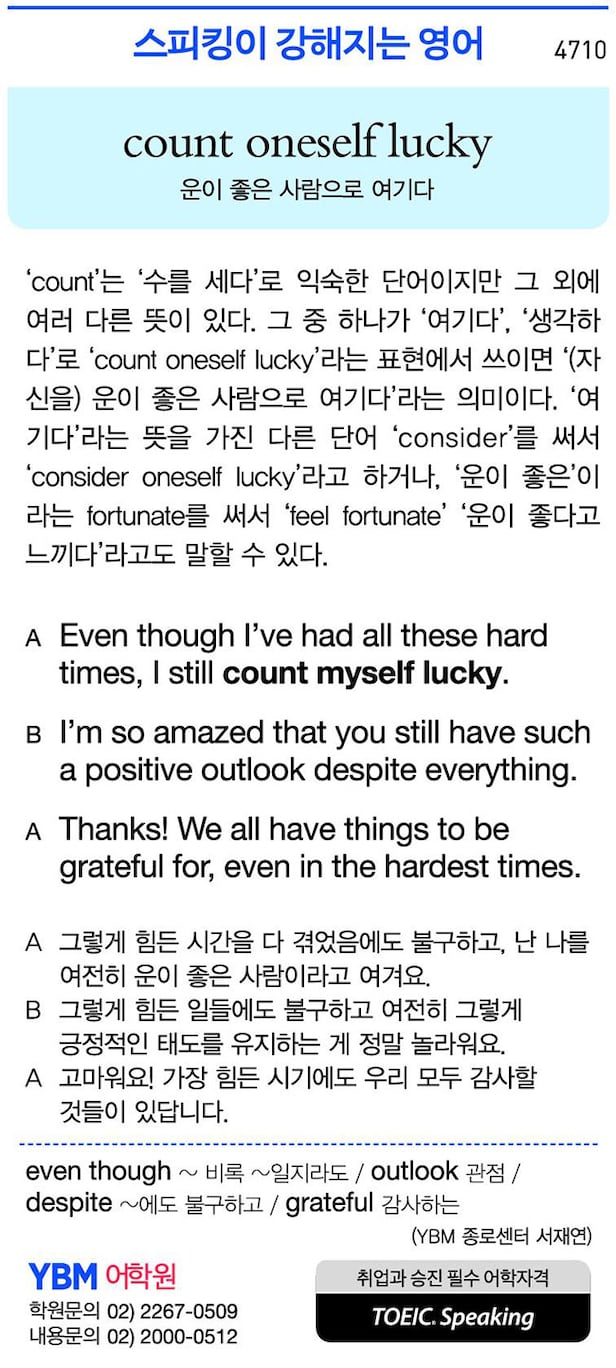
☆ think [consider, count] oneself lucky 스스로를 운이 좋다고 여기다
* I think myself lucky to have such wonderful friends. 나는 이렇게 멋진 친구들이 있어서 스스로를 운이 좋다고 여긴다.
* She considers herself lucky to have found a job she loves. 그녀는 자신이 사랑하는 일을 찾았다고 생각하며 운이 좋다고 여긴다.
* He counts himself lucky to have survived the accident without injuries. 그는 사고에서 다치지 않고 살아남은 것을 다행으로 여긴다.
* We think ourselves lucky to live in such a peaceful neighborhood. 우리는 이렇게 평화로운 동네에 살고 있는 것을 운이 좋다고 생각한다.
* They consider themselves lucky to have won the lottery. 그들은 복권에 당첨된 것을 스스로 운이 좋다고 여긴다.
* You should count yourself lucky to have this opportunity. 당신은 이 기회를 가졌다는 것만으로도 운이 좋다고 여겨야 해요.
* I think myself lucky every day to have a supportive family. 나는 매일 나를 지지해 주는 가족이 있다는 것을 운이 좋다고 생각한다.
* He considers himself lucky to be part of such a talented team. 그는 이렇게 재능 있는 팀의 일원이라는 것을 다행으로 여긴다.
* We count ourselves lucky to have escaped the storm unscathed. 우리는 폭풍에서 무사히 빠져나온 것을 운이 좋다고 여긴다.
* She thought herself lucky to witness the rare celestial event. 그녀는 드문 천문 현상을 목격한 것을 운이 좋다고 생각했다.
? 유의어
⊙ lucky 노력이나 특질에 의한 것이 아니라 우연한 행운의; 구어적인 말.
⊙ felicitous 드물게「행운의」의 뜻으로 사용된다.
⊙ fortunate 중요하고도 다소 영속적인 행운의; 격식을 차리는 말.
⊙ happy lucky와 거의 동의어.
⊙ providential 신의 도움으로「운이 좋은」.
(결과적으로) 운이 좋은, 행운의
* a very lucky goal 아주 운 좋게 들어간 골.
* a lucky guess 운 좋게 맞힌 답.
* a lucky escape (안 좋은 상황 등을) 운 좋게 면함.
* I was lucky to find my lost wallet at the park. 나는 공원에서 잃어버린 지갑을 찾을 수 있어 운이 좋았다.
* She felt lucky to have passed the difficult exam on her first try. 그녀는 어려운 시험을 한 번에 합격해서 운이 좋다고 느꼈다.
* We were lucky to get tickets to the sold-out concert. 우리는 매진된 콘서트 표를 구할 수 있어서 운이 좋았다.
* He’s lucky that the weather cleared up just before the wedding. 그는 결혼식 직전에 날씨가 개어서 운이 좋았다.
* They were lucky to avoid the traffic jam by taking a different route. 그들은 다른 길로 가서 교통 체증을 피할 수 있어서 운이 좋았다.
* You’re lucky to have such a supportive mentor guiding you. 당신은 그렇게 지지해주는 멘토가 있어서 운이 좋네요.
* I consider myself lucky to have such a great opportunity. 나는 이런 훌륭한 기회를 얻어 운이 좋다고 생각한다.
* The lucky contestant won a free trip to Hawaii. 행운의 참가자는 하와이 여행을 무료로 얻었다.
* She was lucky not to get hurt in the accident. 그녀는 사고에서 다치지 않아서 운이 좋았다.
* We were lucky to find a great restaurant without a reservation. 우리는 예약 없이 좋은 식당을 찾을 수 있어서 운이 좋았다.
☆ it is lucky (that)⋯라서 다행이다.
* It’s lucky no-one was hurt. 아무도 안 다쳤다니 다행이다.
* It is lucky that we left early, or we would have missed the flight. 우리가 일찍 떠난 것이 다행이다, 아니었으면 비행기를 놓쳤을 것이다.
* It is lucky that you brought an umbrella, because it started raining. 네가 우산을 가져온 것이 다행이다, 비가 오기 시작했거든.
* It is lucky that the accident wasn't worse. 사고가 더 심하지 않아서 다행이다.
* It is lucky that I remembered to bring my passport to the airport. 공항에 여권을 가져간 것을 기억한 것이 다행이다.
* It is lucky that we found a doctor so quickly. 우리가 그렇게 빨리 의사를 찾은 것이 다행이다.
* It is lucky that I had a spare key, or we would have been locked out. 예비 열쇠가 있어서 다행이다, 아니었으면 우리는 밖에 갇혔을 것이다.
* It is lucky that they were able to fix the car so quickly. 그들이 차를 그렇게 빨리 고친 것이 다행이다.
* It is lucky that she didn’t get hurt in the fall. 그녀가 넘어졌을 때 다치지 않은 것이 다행이다.
* It is lucky that we made it home before the storm started. 폭풍이 시작되기 전에 집에 도착한 것이 다행이다.
* It is lucky that the meeting was postponed, so we have more time to prepare. 회의가 연기된 것이 다행이다, 그래서 우리는 준비할 시간이 더 생겼다.
운 좋게 생기는, (결과가) 다행한; 행운을 가져오는, 재수 좋은.
* a lucky mistake 전화위복의 실수.
* a lucky day 길일(吉日).
* It was a lucky coincidence that we met at the café. 우리가 카페에서 만난 것은 운 좋게 생긴 우연이었다.
* I got a lucky break when I found a job opportunity at the last minute. 나는 마지막 순간에 일자리를 발견해서 운 좋게 기회를 얻었다.
* He had a lucky moment when he found his lost wallet in the park. 그는 공원에서 잃어버린 지갑을 찾아서 운 좋은 순간이었다.
* The lucky timing helped me get the job offer I wanted. 운 좋게도 타이밍이 맞아 내가 원하던 직업 제안을 받았다.
* I got a lucky break when I found a job opportunity at the last minute. 나는 마지막 순간에 일자리를 발견해서 운 좋게 기회를 얻었다.
* He had a lucky moment when he found his lost wallet in the park. 그는 공원에서 잃어버린 지갑을 찾아서 운 좋은 순간이었다.
* The lucky timing helped me get the job offer I wanted. 운 좋게도 타이밍이 맞아 내가 원하던 직업 제안을 받았다.
☆ a lucky escape (안 좋은 상황 등을) 운 좋게 면함
* She had a lucky escape when the car stopped just in time. 그녀는 차가 딱 맞게 멈춰서 운 좋게 탈출했다.
* He had a lucky escape when the tree fell right where he had been standing just moments before. 그는 나무가 바로 자신이 서 있었던 곳에 쓰러지기 직전에 운 좋게 피해갔다.
* It was a lucky escape when the car swerved just in time to avoid hitting the pedestrian. 차가 보행자를 칠 뻔했지만, 다행히도 운 좋게 차가 방향을 틀어 사고를 피했다.
* She had a lucky escape when the building collapsed just after she left. 그녀는 건물이 무너진 직후에 나갔기 때문에 운 좋게 사고를 면했다.
* We had a lucky escape when the storm missed our area. 우리는 폭풍이 우리의 지역을 비켜가면서 운 좋게 피해갔다.
* The passengers had a lucky escape when the plane's engine failure happened while it was still on the ground. 비행기의 엔진 고장이 아직 비행 중이 아니어서 승객들은 운 좋게 사고를 피할 수 있었다.
* They had a lucky escape when the fire broke out in the building, but they were able to get out in time. 그들은 건물에서 불이 났을 때 운 좋게 제때 빠져나올 수 있었다.
* I had a lucky escape when I missed the bus by seconds, only to find out it was stuck in traffic. 나는 버스를 놓친 것이 다행이었고, 그 버스가 교통 체증에 갇힌 것을 알았다.
* It was a lucky escape for the hikers when the storm passed before they reached the summit. 그 등산객들은 폭풍이 꼭대기에 도달하기 전에 지나가면서 운 좋게 위험을 피할 수 있었다.
* The child had a lucky escape when the toy car rolled out into the street, but no cars were coming. 아이는 장난감 차가 거리로 굴러 나갔지만, 차가 오지 않아서 운 좋게 사고를 면했다.
* The boaters had a lucky escape when their boat started sinking, but they were close to shore. 보트가 가라앉기 시작했을 때 그들은 해안 가까이에 있었기 때문에 운 좋게 구출될 수 있었다.
☆ a lucky guess 운 좋게 맞힌 답
* I had a lucky guess when I picked the right answer on the quiz without studying. 나는 공부 없이 퀴즈에서 정답을 맞혔을 때 운 좋게 맞혔다.
* He made a lucky guess and won the prize by choosing the correct number. 그는 운 좋게 맞힌 답으로 상금을 탔다.
* Her lucky guess on the crossword puzzle helped her finish it quickly. 그녀는 크로스워드 퍼즐에서 운 좋게 맞힌 답 덕분에 빠르게 끝낼 수 있었다.
* I took a lucky guess on the multiple-choice test and ended up passing. 나는 객관식 시험에서 운 좋게 맞힌 답을 선택해서 합격했다.
* It was a lucky guess when she predicted the outcome of the game correctly. 그녀는 경기 결과를 정확히 맞춘 운 좋은 예측을 했다.
* I had no idea what the answer was, but I made a lucky guess and got it right. 나는 답이 무엇인지 전혀 몰랐지만, 운 좋게 맞힌 답을 해서 맞았다.
* His lucky guess saved him from failing the exam. 그의 운 좋은 추측이 그를 시험에서 떨어지지 않게 했다.
* She got a lucky guess on the puzzle and completed it in no time. 그녀는 퍼즐에서 운 좋게 맞힌 답으로 순식간에 퍼즐을 완성했다.
* I had a lucky guess about the surprise gift and picked the right one. 나는 그 깜짝 선물에 대해 운 좋게 맞힌 답을 고를 수 있었다.
* It was a lucky guess that led me to the right answer on the trivia game. 퀴즈 게임에서 내가 운 좋게 맞힌 답이 정답으로 이끌었다.
(숫자, 물건 등이) 행운을 가져오는
* What’s your lucky number? 당신의 행운의 숫자는 뭐에요?
* She always carries a lucky coin in her wallet for good luck. 그녀는 행운을 위해 항상 지갑에 행운의 동전을 가지고 다닌다.
* His lucky number is seven, and he always chooses it when he plays the lottery. 그의 행운의 숫자는 7번이며, 그는 복권을 할 때마다 항상 그것을 고른다.
* The rabbit's foot is considered a lucky charm in many cultures. 토끼 발은 많은 문화에서 행운의 부적이라고 여겨진다.
* I found a lucky penny on the street, and I hope it brings me good fortune. 나는 길에서 행운의 동전을 발견했는데, 그것이 나에게 행운을 가져다주기를 바란다.
* He wore his lucky socks during the important match, believing they would help him win. 그는 중요한 경기 동안 행운의 양말을 신고 경기를 이길 수 있을 거라 믿었다.
* Her lucky bracelet is said to bring her success in everything she does. 그녀의 행운의 팔찌는 그녀가 하는 모든 일에서 성공을 가져다준다고 한다.
* That number has always been a lucky one for me, so I chose it for my new house. 그 숫자는 항상 나에게 행운을 가져다줬기 때문에 나는 새 집에 그것을 선택했다.
* The lucky charm he received as a gift from his grandmother has brought him much happiness. 할머니가 선물해 주신 행운의 부적은 그에게 많은 행복을 가져다주었다.
* She believes that wearing her lucky ring will help her land the job she wants. 그녀는 자신의 행운의 반지를 끼면 원하는 직업을 얻을 수 있을 거라고 믿는다.
* That old painting is considered a lucky artifact in the family. 그 오래된 그림은 가족 내에서 행운을 가져다주는 유물로 여겨진다.
[스코틀랜드] 풍부한.
☑️ 숙어
☆ Lucky (for) you[or him, devil]! 운 텄군! 억세게 운이 좋군!

☆ Lucky me. 고맙군, 좋았어.
☆ strike (it) lucky《英구어》 (…에 대해) 운이 좋다(with).
☆ You’ll be lucky! 《구어》 그렇게는 잘 안될 걸!, 혹시 알아?, 잘 해봐!
☆ You[or He, etc .] should be so lucky. 《구어》 쉽지 않았을걸; 운이 좋았어.
? 명사 (luck·ies[-z])
행운의 것, 재수가 좋은 것.
(one’s ~) 《英속어》 도망(escape).
☑️ 숙어
☆ cut [make] one’s lucky [영국 속어] 도망가다, 내빼다.
☆ touch lucky [입말] 행운을 만나다.
? 부사
[스코틀랜드] 활수하게, 후하게; 너무나.