☆ Badnewstravelsquickly. = Illnewsruns[orflies] apace. {속담} 나쁜 소문은 빨리 퍼진다.
A: I heard that Susan got canned yesterday.
B: Yes, poor girl, bad news travels fast.
A: What happened?
B: Management caught her spreading rumors and you know how they hate that!
A: So, how did they find out?
B: It seems that Marsha was reporting things back to the boss.
A: 수잔이 어제 해고됐다고 들었어요.
B: 네, 안 됐어요, 나쁜 소문은 빨리 퍼지죠.
A: 무슨 일이 있었어요?
B: 경영진에서 그녀가 소문을 퍼뜨리는 것을 알았는데 그들이 그런 것을 싫어한다는 거 알잖아요!
A: 그런데 그걸 어떻게 알았대요?
B: 마샤가 윗사람에게 보고한 것 같던데요.
A: I have heard that Mr.Min went almost broke. He must have taken it hard.
B: I know. His investments were completely wiped out when the price of those stocks fell. But, how did you find out so soon?
A: I guess bad news travels fast.
A: 민 선생이 거의 파산이라면서요? 견디기 많이 힘들겠네요.
B: 그러게요. 주가가 내리면서 투자액을 모두 날렸어요. 그런데 그 소식을 어떻게 이렇게 빨리 알았어요?
A: 나쁜 소식은 원래 빨리 퍼지기 때문이겠죠.
☆ be good news 반가운 소식이다.
* The new menu item is good news for people who like mint. 박하향을 좋아하는 사람들에게는 신메뉴가 반가운 소식이다.
☆ News travel fast. 발 없는 말이 천리 간다.
(신문 따위의) 기사, 뉴스, 정보(information); (the ~) (텔레비전·라디오의) 정시 뉴스 프로그램(* news를 셀 때는 anitem[orapiece, abit] ofnews / anewsitem).
* foreign[sports, financial] news 해외[스포츠, 금융] 뉴스.
* watchthenewsontelevision 텔레비전의 뉴스를 보다.
* I saw that on the news. = That story was on the TV news. = I was able to catch the story of that on TV.
A: Genie! Did you hear the news today?
B: Not yet! What kind of news was reported?
A: A nuclear power plant at Fukushima exploded and burned.
B: Really? It is frightening even to think of the horrors of a nuclear explosion.
A: 지니! 오늘 뉴스 들었니?
B: 아직! 무엇에 관한 뉴스였어?
A: 후쿠시마에 있는 원자력 발전소가 폭발하고 불에 탔대.
B: 정말? 핵폭발의 공포는 생각만 해도 끔찍하다.
☆ catch up on the news 최신 뉴스를 숙지하다.
* I need to catch up on the news—I’ve been offline all weekend. 주말 내내 오프라인이라 뉴스를 좀 챙겨봐야겠어. * She always catches up on the news during her morning coffee. 그녀는 아침 커피 마시면서 항상 뉴스를 챙겨봐. * Let me catch up on the news before we start the meeting. 회의 시작 전에 뉴스 좀 훑어볼게. * He spent the whole evening catching up on the news. 그는 저녁 내내 뉴스 보는 데 보냈어. * I usually catch up on the news through Twitter. 난 보통 트위터로 뉴스 챙겨봐. * It’s hard to catch up on the news when you’re traveling. 여행 중엔 뉴스 챙기기가 힘들어. * I just got back—mind if I catch up on the news first? 방금 도착했어—먼저 뉴스 좀 보고 괜찮을까? * These days, I barely have time to catch up on the news. 요즘엔 뉴스 챙겨볼 시간도 거의 없어. * We caught up on the news together while eating lunch. 점심 먹으면서 같이 뉴스 봤어. * She uses podcasts to catch up on the news during her commute. 그녀는 출퇴근길에 팟캐스트로 뉴스 챙겨 들어.
A: You seem lost. B: Yeah, I haven’t caught up on the news lately. A: 너 좀 어리둥절해 보이는데? B: 응, 요즘 뉴스 제대로 못 챙겨봤어.
A: How do you catch up on the news? B: Mostly YouTube and Reddit these days. A: 뉴스는 주로 어떻게 챙겨봐? B: 요즘은 거의 유튜브랑 레딧이야.
A: Let’s watch the game now! B: Hold on, I’m catching up on the news first. A: 이제 경기 보자! B: 잠깐만, 뉴스부터 좀 챙기고.
☆ keep up with the news 뉴스에 뒤처지지 않다.
* I try to keep up with the news every morning. 난 매일 아침 뉴스를 챙겨보려고 해. * It’s hard to keep up with the news when things change so fast. 요즘처럼 변화가 빠를 땐 뉴스 따라가기도 힘들어. * She uses Twitter to keep up with the news. 그녀는 트위터로 뉴스를 챙겨봐. * I haven’t been keeping up with the news lately. 요즘 뉴스 제대로 못 챙겨봤어. * You need to keep up with the news to stay informed. 세상 돌아가는 걸 알려면 뉴스 꾸준히 봐야 해. * I listen to podcasts to keep up with the news on the go. 이동 중에 뉴스 팟캐스트 들으면서 챙겨. * He’s always up early to keep up with the news. 그는 뉴스 챙기려고 항상 일찍 일어나. * I use a news app to keep up with the headlines. 난 헤드라인만이라도 챙기려고 뉴스 앱 써. * It’s important to keep up with the news, especially during elections. 선거철에는 특히 뉴스 챙겨보는 게 중요해. * My dad reads three newspapers a day to keep up with the news. 우리 아빠는 하루에 신문 세 개나 읽으면서 뉴스를 챙겨봐.
A: You heard about the new policy, right? B: Nope, I haven’t been keeping up with the news. A: 새 정책 얘기 들었지? B: 아니, 요즘 뉴스 못 챙기고 있었어.
A: How do you keep up with the news? B: Mostly YouTube and a few news alerts. A: 뉴스는 어떻게 챙겨봐? B: 주로 유튜브랑 뉴스 알림 몇 개로 봐.
A: You’re always so up-to-date! B: I just try to keep up with the news every day. A: 너 항상 시사에 빠삭하네! B: 그냥 매일 뉴스 놓치지 않으려고 노력하는 거야.
색다른 것[사건], 진문(珍聞), 뉴스거리, 새 사건; 뉴스의 인물.
* Thewarwasnolongerfront-pagenews. 전쟁은 더 이상 큰 뉴스거리가 아니었다.
A: I heard that you're in charge of ordering the kid's baseball uniforms. B: Well, that's news to me.
A: 아이들의 야구 유니폼 주문을 네가 맡았다며?
B: 글쎄, 난 금시초문인데.
4 (N-) 《신문 이름으로 써서》 …신문.
5 = newscast.
6 = newsprint.
7 = newsboard 1.
☑️ 숙어
☆ beinthenews (신문 따위의) 기삿거리가 되다.
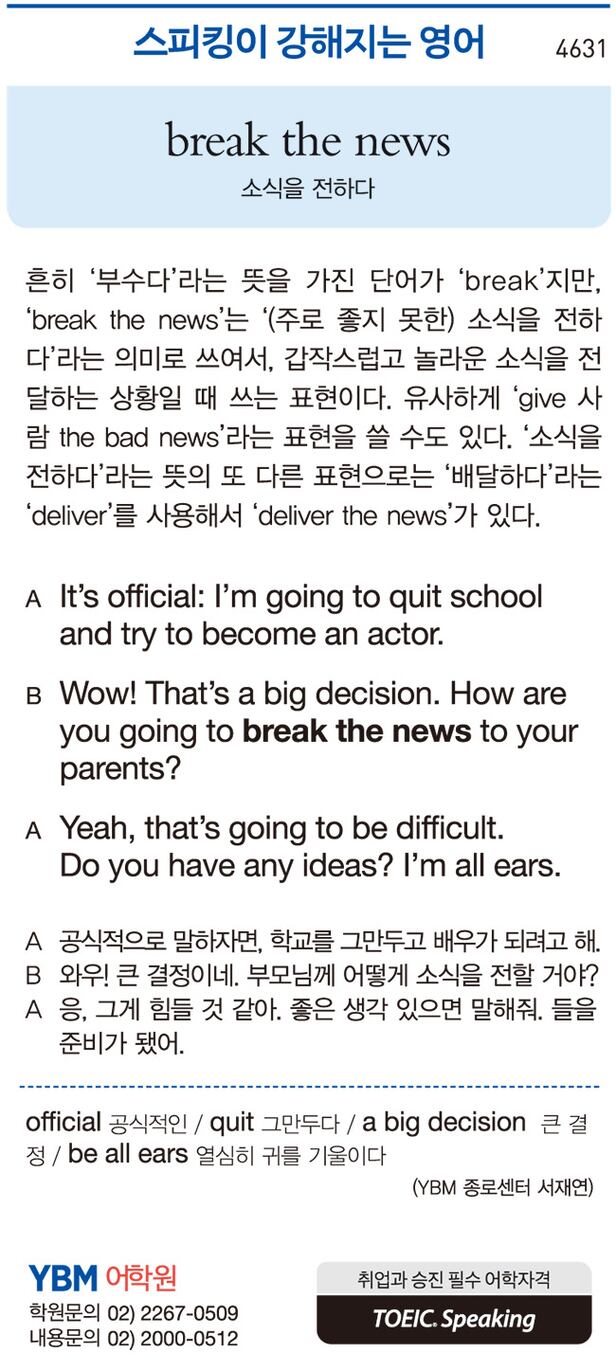
☆ breakthenewsto...
① …에게 (나쁜) 소식을 전하다.
② 《속어》 …의 허를 찌르다.
☆ makenews 신문의 기삿감이 될 만한 일을 하다.
☆ newsfromnowhere 이미 알려진[알고 있는] 일.
☆ stay in the news 계속 뉴스에서 화제가 되다.
* The channel also forecasts China-Japan relations will stay in the news this year with territorial disputes likely to simmer.