rumor
(…에 관한) 소문, 풍문, 유언비어(about, of). ⇒ GOSSIP
* a groundless[an absurd] rumor 근거 없는[어처구니없는] 풍문.
* a rumor of war 전쟁의 풍문.
* the author of a rumor 소문을 내는 사람.
A: I can’t believe it! You know me! That’s not true!
B: Okay, I believe you.
B: Okay, I believe you.
A: Anyway, thank you for telling me about that rumor.
B: Don’t mention it. I’m glad I could help.
A: And I’m sorry. I made you guys worried about me.
B: Don’t mention it. I’m glad I could help.
A: And I’m sorry. I made you guys worried about me.
A: 정말 믿을 수가 없군! 나 잘 알잖아! 그건 사실이 아니야!
B: 좋아, 널 믿을게.
A: 어쨌든 그 소문에 대해 이야기해 줘서 고맙다.
B: 무슨 그런 말을. 도움이 되었다니 다행이다.
A: 그리고 미안하다. 너희들한테 걱정을 끼쳤어.
속삭임, 소근거림; 멀리서 들려오는 소리.
rumors 《단수취급》 전언(傳言)놀이(짧은 이야기를 한 사람씩 차례로 옮겨서 끝까지 정확히 전달되는지를 겨루는 것).
[고어] 소음, 웅성거리기; 명성, 평판.
☑️ 숙어
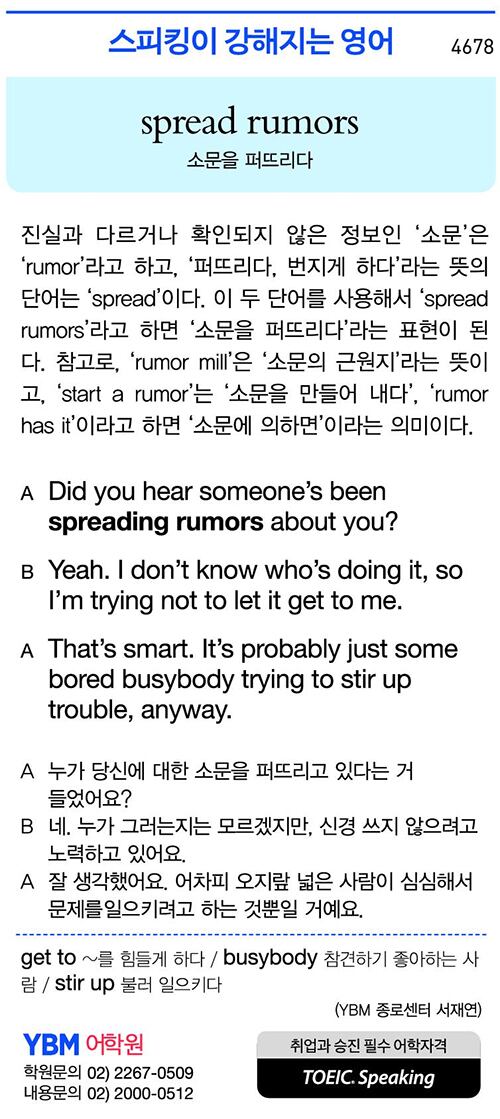
☆ Rumor has it [Rumor says, There is a rumor, The rumor is] that... …이라는 소문이다.
☆ Rumor has it [Rumor says, There is a rumor, The rumor is] that... …이라는 소문이다.
* Rumor has it. 소문이 났어요.
* Rumor has it that this restaurant makes the best New York steak in town! 소문에 의하면 이 레스토랑이 근처에서 최고로 맛있는 뉴욕 스테이크를 만든대!
* Rumor has it that our office is moving to the top floor! 소문에 의하면 우리 사무실이 제일 높은 층으로 옮길 거라고 하네요!
* Rumor has it that Peter left for New York two years ago to study architecture. 소문에 의하면 피터가 2년 전에 건축을 공부하러 뉴욕으로 떠났대.
A: Rumor has it that you won the lottery.
B: Don't believe all that you hear.
A: That's solid advice.
A: 너 복권 당첨됐다는 소문이 들리더라.
B: 듣는 걸 다는 믿지마.
A: 그거 유익한 조언이네.
B: Don't believe all that you hear.
A: That's solid advice.
A: 너 복권 당첨됐다는 소문이 들리더라.
B: 듣는 걸 다는 믿지마.
A: 그거 유익한 조언이네.

☆ start a rumor 소문을 내다.
☆ The rumor runs that... …라는 소문이 퍼지고[돌고] 있다.
? 타동사
…을 소문내다, 풍문을 퍼뜨리다; 《수동형으로》 …의 […라는] 소문이 나다.
* It is rumored that he has gone bankrupt. = He is rumored to have gone bankrupt. 그가 파산했다는 소문이 있다.