shame
(…에 대한) 부끄럼, 부끄러운 생각, 수치심(at, for).
from [out of] shame 부끄러워서.
feel shame at ···을 부끄럽게 여기다.
He has no shame. 그는 창피를 모른다.
He that has no shame has no conscience. 수치심이 없는 사람은 양심이 없다.
(…에의) 치욕, 불명예, 수치(on). ⇒ DISGRACE
bring shame and disgrace on one’s family name 가문에 망신과 불명예를 가져오다.
a shame (···의) 수치스러운 일, 치욕, 망신감(to).
a great [crying, terrible] shame 큰 치욕[망신감].
a shame 《보통 it, that 따위를 주어로》 면목 없는 일, 심한 일, 유감스러운 일.
* It was a shame that you couldn’t come with us. 당신이 우리와 동행할 수 없어서 유감스러웠다.
A: Your son Nick was really impressive.
B: Thank you. It's a shame he didn't score a goal, though.
A: Right. He had a good header, but it hit the post. That was a bummer.
A: 당신 아들 닉은 정말 인상적이었어요.
B: 고마워요. 하지만 골을 못 넣어서 참 유감이에요.
A: 맞아요. 헤딩을 아주 잘했는데, 골대를 맞혀 버렸죠. 정말 아쉬웠어요.
☆ it would be a huge shame for ...에게 너무나 심한/유감스러운 일이 될 것이다
* “It would be a huge shame for science, and for the public, if this disappeared into the basement of an oligarch,” said Steve Brusatte, a professor of paleontology and evolution at the University of Edinburgh.
(여자의) 좋지 못한 행실, 난질.
☑️ 숙어
☆ a child of shame 사생아.
☆ Ain’t it a shame? 《구어》 너무 지나치잖아.
☆ a life of shame 《고어》 추업(醜業), 매음(賣淫).
☆ bear shame 수치를 참다.
☆ bring [put] a person to shame ① 남에게 창피를 주다, 남을 모욕하다. ② 남을 압도하다, 앞지르다.
☆ bring shame on oneself 체면을 구기다, 망신[치욕]을 자초하다.
☆ burn with shame 쥐구멍에라도 들어가고 싶다.
☆ cannot do...for [from, out of] shame 창피해서 …못하다.
☆ cry shame upon [on] …을 몰염치[파렴치]하다고 비난하다.
☆ dead [lost] to shame 창피를 모르는.
☆ feel [think] shame to do …하는 것을 부끄럽게[너무하다고, 유감으로] 여기다.
☆ Fie for shame! 《고어》 = For shame!
☆ For shame! 창피한 줄 알아라!
☆ flush [blush] with [for] shame 부끄러워 얼굴을 붉히다.
☆ in [for] shame 창피하여, 부끄러워서.
* bow [hang] one’s head in shame 창피해서 고개를 떨구다.
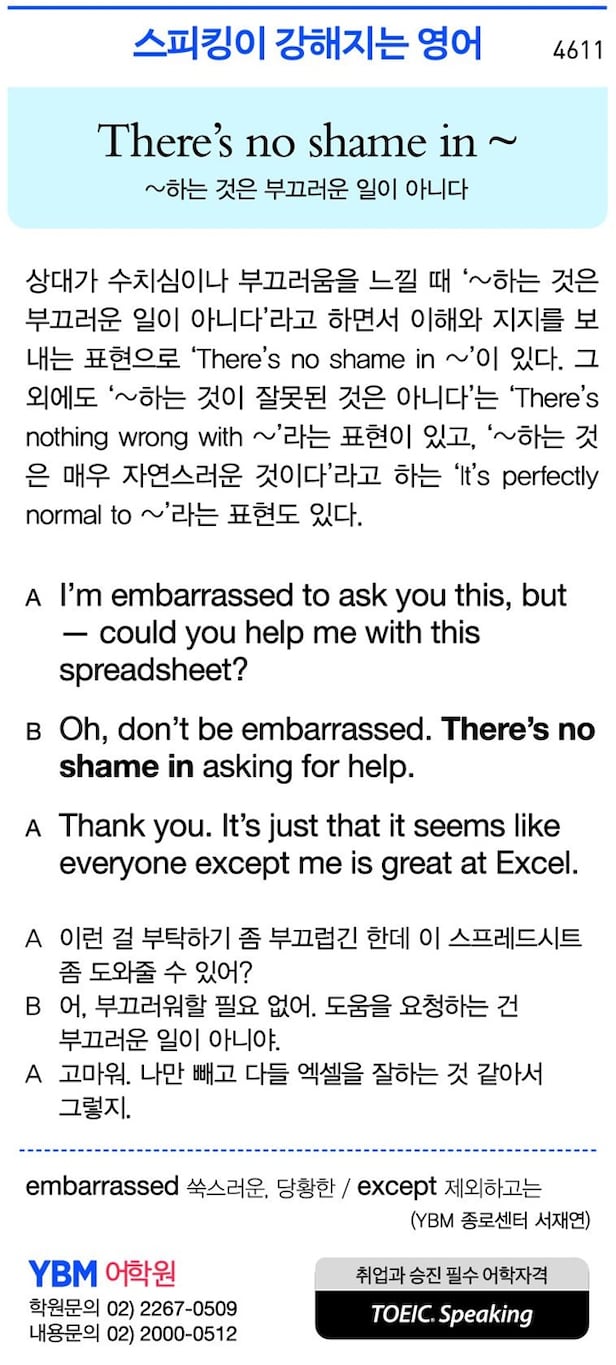
☆ Shame on you! 창피한 줄 알아라! 부끄러운 줄 알아!
A: Hey, what are you doing? Don't throw that out.
B: But I've finished using it. It's just garbage.
A: Shame on you. You should wash it and use it again.
B: You shouldn't have bought disposable dishes in the first place.
A: 얘, 너 뭐 하는 거니? 그거 버리지 마.
B: 다 쓴 건데, 뭘. 그냥 쓰레기일 뿐이라고.
A: 부끄러운 줄 알아. 씻어서 다시 써야지.
B: 너야말로 애초에 일회용 접시를 사지 말았어야지.
☆ Shame, shame! 창피한 줄 알라(* 연설 따위에 대한 야유).
☆ suffer the shame of …을 수치로 여기다.
☆ That’s [It’s] a shame. 유감이다, 그럴 수 있어?, 괘씸하다.
☆ The shame of it (all)! 창피하게시리!
☆ To one’s shame 부끄러운[창피한] 얘기지만.
☆ What a shame! 그것 참 너무[괘씸]하군!; 그거 안됐구나[유감이다].
A: Wow, this palace is amazing. How old is it?
B: It was built in 1395, during the Joseon Dynasty.
A: And it says it was once destroyed in the Japanese colonial rule.
B: Right. What a shame. Then it was rebuilt later.
A: 와, 이 궁궐 정말 멋지다. 얼마나 오래된 거야?
B: 1395년, 조선 시대에 지어졌어.
A: 일제 강점기에 한 번 파손되었다고 되어 있네.
B: 맞아. 안타까운 일이지. 그러고 나서 나중에 다시 지어졌어.
☆ without shame 염치 없는[없이], 뻔뻔스럽게.
? 타동사 (~s[-z]; ~d; sham·ing)
1 …을 창피주다, …을 망신시키다, …의 체면을 깎다; 모욕하다.
shame one’s father 아버지를 망신시키다.
2 창피를 주어 [남]을 (…하게 / …못하게) 하다(into (doing) / out of (doing)).
He was shamed out of gambling. 그는 창피를 당하여 도박을 그만두었다.
He was shamed into working. 그는 창피를 당하여 일하게 되었다.
3 (우수함 따위로) …을 무안하게 만들다, …와 비교도 안 되다, …보다 뛰어나다.
The clarity of the new TV shames some movie screens. 새 TV의 선명도는 일부 영화 화면보다 훨씬 낫다.
? 자동사
━ 《고어》 (…하는 것을) 부끄러워하다(to do).
☑️ 숙어
tell [speak, say] the truth and shame the devil 큰맘 먹고 사실을 말하다, 눈 딱 감고 사실을 말하다.