time
B: I know, right? It feels like just yesterday we were counting down to the new year.
A: Seriously, it's crazy how the year just zoomed by.
B: But you know what? I'm super pumped for the new year, new beginnings and all that jazz!
A: Me, too. Let's make it epic!
A: 시간이 얼마나 빨리 가는지 너도 느꼈니? 벌써 2024년이야!
B: 그러게 말이야. 정말 대단하지? 새해 카운트다운을 하던 게 바로 어제 같은데 말이야.
A: 농담 아니고, 정말 한 해가 눈 깜짝할 사이에 지나갔어.
B: 근데 그거 알아? 난 새해에 대해 진짜 기대가 커. 새로운 시작이고 뭐 이런저런거 다 말이야.
A: 나도 그래! 한번 기가 막히게 만들어 보자고!
(막연히 한정된) 시간, 기간, 동안; (…하는 데 필요한[소비된]) 시간.
B: Catching up on some sleep is always good.
A: You know what? We never finished scheduling our travel plans in Bali.
B: You're right! We have so much to do in so little time.
A: Let's work on it as soon as we board the plane.
A: 우리가 비행기 타고 가는 시간을 어떻게 최대한 활용할 수 있는지 생각을 좀 해 봤는데. 너 뭐 아이디어 있니?
B: 밀린 잠을 좀 자는 게 늘 좋지.
A: 있잖아? 우리 발리에서 할 여행 계획 짜는 것도 다 못했잖아.
B: 그렇지! 시간이 별로 없는데 할 건 아주 많구나.
A: 비행기 타자마자 그거 하자.

* She's been going through a rough time lately due to personal challenges, so let's offer her our support. 최근 개인적인 어려움으로 인해 그녀는 힘든 시간을 겪고 있으니 우리가 지원을 제공합시다.
* We all face rough times in life, but it's how we handle them that defines our strength and resilience. 모두 인생에서 힘든 시간을 겪지만, 어떻게 대처하는지가 우리의 힘과 탄력을 결정합니다.
* Despite going through a rough time, he remained determined and never gave up on his dreams. 힘든 시간을 겪으며도 그는 결연하게 지치지 않고 자신의 꿈을 포기하지 않았습니다.
* It's important to reach out for help and support when going through a rough time. 힘든 시간을 겪을 때 도움과 지원을 요청하는 것이 중요합니다.
* The loss of a loved one can bring about a rough time filled with grief and sadness. 사랑하는 사람을 잃는 것은 슬픔과 애도로 가득한 힘든 시간을 가져올 수 있습니다.
* She found solace in music during her rough time and used it as a form of emotional release. 그녀는 힘든 시간에 음악에서 위로를 찾았고, 감정적인 해방 수단으로 활용했습니다.
* Going through a rough time can teach us valuable lessons and help us grow as individuals. 힘든 시간을 겪는 것은 우리에게 소중한 교훈을 가르치고 개인적으로 성장하는 데 도움을 줄 수 있습니다.
* Let's support each other through rough times and be a source of strength for one another. 힘든 시간을 함께 견뎌내며 서로에게 힘의 근원이 되어줍시다.
* Remember, even during the rough times, there is always hope for a brighter future. 기억해주세요, 힘든 시간에도 언제나 더 밝은 미래를 향한 희망이 있습니다.
B: Hmmm…. Now I am busy. How about meeting about an hour later? Do you have the time?
A: I see. It's noon now.
B: Then, see me at one.
A: 시간 좀 있으세요?
B: 흠…. 지금은 좀 바쁜데. 대략 한 시간쯤 후에는 어떠세요? 지금 몇 시죠?
A: 그래요. 지금 정오예요.
B: 그럼, 한 시에 봬요.
(때로 T-) 표준시, …시.
《英》의 표준시는 Greenwich Time, 《美》의 표준시는 Eastern Time, Central Time, Mountain Time, Pacific Time, Yukon Time, Alaska Time, Bering Time 등 7시간대에 걸쳐 있다. 한국의 표준시는 Korea Standard Time.
(…하기에 충분한) 시간; (…할) 틈, 여가(for, to do).

미안하지만 우리 나중에 이야기 하자. 나 지금 시간이 없어. 10분 안으로 이 계약서 손봐서 Jonathon한테 줘야 해.
* He enjoys getting some alone time in the morning to meditate and plan his day. 그는 아침에 명상하고 하루 일정을 계획하기 위해 자신만의 시간을 가지는 것을 즐겨해요.
* She values getting some alone time on the weekends to pursue her hobbies and recharge for the upcoming week. 그녀는 주말에 자신만의 시간을 가지고 취미를 즐기고 다가오는 한 주를 위해 에너지를 충전하는 것을 중요하게 생각해요.
* It's essential for parents to schedule some alone time to maintain their mental well-being and recharge. 부모들이 정신적 안녕과 에너지를 충전하기 위해 자신만의 시간을 계획하는 것이 중요해요.
* Taking a walk in the park allows me to get some alone time and clear my mind. 공원을 산책하는 것은 자신만의 시간을 가지고 마음을 정화하는 데 도움이 돼요.
* Since we arrived early, we have plenty of time to explore the city before the conference starts. 우리가 일찍 도착했기 때문에, 회의가 시작되기 전에 도시를 탐험할 시간이 충분해요.
* With the weekend ahead, she has plenty of time to catch up on her reading. 주말이 다가오니까, 그녀는 독서를 따라잡을 시간이 충분해요.
* Even though the flight is delayed, we still have plenty of time to catch our connecting flight. 비행이 지연되었지만, 여전히 우리는 연결편을 탑승할 충분한 시간이 있어요.
* Let's enjoy our meal; we have plenty of time before the movie starts. 식사를 즐기죠; 영화가 시작되기 전에 충분한 시간이 있어요.
* After weeks of working overtime, he finally had some time for himself last weekend. 몇 주 동안 초과 근무를 한 후, 그는 지난 주말에야 자신을 위한 시간을 가졌어요.
* It’s important to have some time for yourself to maintain a healthy work-life balance. 건강한 워라밸을 유지하려면 자신을 위한 시간을 가지는 것이 중요해요.
* She loves going to the spa to have some time for herself and unwind. 그녀는 자신을 위한 시간을 가지며 휴식을 취하기 위해 스파에 가는 것을 좋아해요.
* Even busy parents need to have some time for themselves occasionally. 바쁜 부모라도 가끔은 자신을 위한 시간이 필요해요.
* Taking a short vacation gave him the chance to have some time for himself. 짧은 휴가를 떠나면서 그에게 자신을 위한 시간을 가질 기회가 생겼어요.
* When her family went out, she stayed home to have some time for herself. 가족이 외출했을 때 그녀는 집에서 자신을 위한 시간을 보냈어요.
* I think you should have some time for yourself to relax and recharge. 나는 네가 휴식을 취하고 재충전하기 위해 자신을 위한 시간을 가져야 한다고 생각해요.
* Having some time for herself every morning helps her feel more centered. 매일 아침 자신을 위한 시간을 가지는 것이 그녀를 더 안정된 기분이 들게 해요.
* He scheduled a free afternoon to have some time for himself and enjoy his hobbies. 그는 자신을 위한 시간을 가지고 취미를 즐기기 위해 오후 시간을 비워뒀어요.
* She enjoys going for a walk in the park to have some time to herself. 그녀는 공원에서 산책하며 혼자만의 시간을 보내는 것을 즐겨요.
* It’s important to have some time to oneself to recharge and relax. 재충전하고 휴식을 취하기 위해 혼자만의 시간을 가지는 것은 중요해요.
* He closed his office door so he could have some time to himself to think. 그는 혼자만의 시간을 가지며 생각할 수 있도록 사무실 문을 닫았어요.
* Having some time to herself each morning helps her start the day calmly. 매일 아침 혼자만의 시간을 가지는 것이 그녀가 하루를 차분하게 시작하는 데 도움을 줘요.
* After spending the whole day with the kids, she needed to have some time to herself. 하루 종일 아이들과 시간을 보낸 후, 그녀는 혼자만의 시간이 필요했어요.
* I like to stay up late sometimes just to have some time to myself. 가끔은 혼자만의 시간을 가지기 위해 늦게까지 깨어 있는 것을 좋아해요.
* He went on a solo trip to the countryside to have some time to himself. 그는 혼자만의 시간을 보내기 위해 시골로 혼자 여행을 떠났어요.
* Having some time to oneself during a hectic day can help reduce stress. 바쁜 하루 중에 혼자만의 시간을 가지는 것은 스트레스를 줄이는 데 도움이 될 수 있어요.
* When the house is quiet, it’s the perfect chance to have some time to myself. 집이 조용할 때는 혼자만의 시간을 보내기에 딱 좋은 기회예요.
* I don't have any time to hang out with my friends. 친구들 만나서 놀 시간이 전혀 없다니까.
* After a long day at work, I like to relax and have some me time. 긴 하루 일한 후에는 휴식을 취하고 혼자만의 시간을 갖는 것을 좋아한다.
* Taking a long bath is my favorite way to enjoy me time. 긴 목욕을 하는 것이 나의 혼자만의 시간을 즐기는 가장 좋은 방법이다.
* I cherish my me time in the morning before everyone else wakes up. 다른 사람들이 일어나기 전 아침의 혼자만의 시간을 소중히 여긴다.
* Sometimes, all I need is some me time to recharge and reflect. 가끔 나에게 필요한 것은 재충전하고 반성하기 위한 혼자만의 시간뿐이다.
* During my me time, I like to listen to calming music and unwind. 나의 혼자만의 시간에는 진정한 음악을 듣고 마음을 풀어내는 것을 좋아한다.
* Going for a walk in nature is the perfect way for me to enjoy some me time. 자연 속을 산책하는 것이 나에게 적당한 혼자만의 시간을 즐기는 완벽한 방법이다.
B: I agree. That's why I started waking up early in the morning.
A: Oh, really?
B: Yes, I wake up around 5 AM and have my own routine for about 2 hours every day.
A: Do you get enough sleep that way?
B: I go to bed early with the kids at their bedtime.
A: 아이를 둘 키우다 보니 나만의 시간을 갖기가 참 쉽지 않네요.
B: 맞아요. 저는 그래서 새벽 기상을 시작했어요.
A: 아, 그래요?
B: 네, 새벽 5시쯤 일어나서 나만의 루틴을 매일 2시간 정도 가져요.
A: 그러면 잠이 부족하지는 않으세요?
B: 아이들이 자는 시간에 같이 일찍 잠자리에 들어요.
* He enjoys spending some time alone in nature, away from the hustle and bustle of city life. 그는 도시 생활의 소란에서 벗어나 자연 속에서 조용한 시간을 보내는 것을 즐겨해요.
* After a busy week, she looks forward to spending some time alone at home, reading her favorite books. 바쁜 한 주가 지나고 나면, 그녀는 집에서 자신만의 시간을 보내서 좋아하는 책을 읽는 것을 기대해요.
* Spending some time alone allows for self-reflection and personal growth. 자신만의 시간을 보내면 자기 반성과 개인적인 성장이 가능해져요.
* It's healthy to spend some time alone doing activities you enjoy, whether it's painting, writing, or simply relaxing. 그대로 쉬거나, 그림을 그리거나, 글을 쓰는 등 즐기는 활동을 하며 자신만의 시간을 보내는 것은 건강에 좋아요.
하지만 아이를 낳고 나서, 특히 엄마의 손이 많이 필요한 아이의 영유아 시기에는 나만의 시간을 전혀 가질 수 없었다. 혼자만의 시간을 갖기 위해서는 잠을 줄여야 했다.
* She enjoys spending her time to herself reading books or going for walks in nature. 그녀는 책을 읽거나 자연에서 산책을 하며 자신만의 시간을 보는 것을 즐겨해요.
* After a busy week at work, he looks forward to having some time to himself on the weekend. 바쁜 한 주가 끝나고 나면, 그는 주말에 자신만의 시간을 가질 것을 기대해요.
* Having time to oneself allows for introspection and personal growth. 자신만의 시간을 가지면 내성적인 고찰과 개인적인 성장이 가능해져요.
* Some people prefer to spend their time to themselves pursuing hobbies or creative activities. 어떤 사람들은 취미나 창의적인 활동을 쫓으며 자신만의 시간을 보는 것을 선호해요.
* She always tries to use her time meaningfully by volunteering at local charities. 그녀는 지역 자선단체에서 봉사하며 시간을 의미 있게 쓰려고 항상 노력해요.
* Instead of watching TV all day, why not use your time meaningfully and read a book? 하루 종일 TV를 보는 대신, 시간을 의미 있게 써서 책을 읽는 건 어때요?
* He decided to use his time meaningfully by pursuing a hobby he loves. 그는 자신이 좋아하는 취미를 추구하며 시간을 의미 있게 쓰기로 했어요.
* Taking an online course is a great way to use your time meaningfully. 온라인 강의를 듣는 것은 시간을 의미 있게 쓰는 훌륭한 방법이에요.
* Parents can teach their children to use their time meaningfully by setting good examples. 부모는 좋은 본보기를 보여주며 자녀들에게 시간을 의미 있게 쓰는 법을 가르칠 수 있어요.
* I feel happiest when I use my time meaningfully to help others. 나는 다른 사람들을 돕기 위해 시간을 의미 있게 쓸 때 가장 행복해요.
* During her free time, she likes to use her time meaningfully by practicing yoga. 그녀는 여가 시간에 요가를 연습하며 시간을 의미 있게 보내는 것을 좋아해요.
* To use my time meaningfully, I plan my tasks and set priorities each day. 시간을 의미 있게 쓰기 위해 나는 매일 할 일을 계획하고 우선순위를 정해요.
* He encourages his students to use their time meaningfully by participating in extracurricular activities. 그는 학생들이 과외 활동에 참여하면서 시간을 의미 있게 쓰도록 격려해요.
(…하는 데) 알맞은 때, 적기; 당연히 (…이 행해질) 때; (…할) 때, 기회, 호기(好機)(for, to do,「that절」).
* Don't you think it's time to get going? 이제 가야 할 시간 아닌가?
* Don't we think it's time to finally buy it? 우리 그걸 사야 할 때가 아닌가?
* It's time for a change. 변화를 줄 때야.
* It's time for bed. 잘 시간이야.
8 《복합어로》
(특정한 경험을 수반한) 시간, 때, 한때; 매우 유쾌한[불쾌한] 한때[경험]; 《속어》 야단법석; (~s) 경기, 시세, 풍조.

(특정한) 때, 시각; 《종종 복합어로》 시기, 계절, 시절.
(종종 ~s) 《복합어로》 (역사상의) 시대, 시기, 연대, …대(代); 당시; (the ~s) 현대, 작금, 최근.
12 (one’s ~) (사람의) 일생, 생애; 젊을 때, 한창때; (어떤 사람의) 시대, 생존 시절; (물건의) 수명.
13 (제한된[정해진]) 기간; 견습 기간, (머슴살이의) 연기(年期); 병역 (기간), (복무) 기간; 《구어》 형기(刑期).
14 근무 시간[기간, 일수]; (술집 따위의) 영업 시간; (시간·일당 기준) 급료[임금]; 시간[일]급.
15 (one’s ~)
16 <음악> 박자, 가락; 리듬, 속도, 템포(tempo).
17 <스포츠> (경기·경주 따위의) (소요) 시간; 계측 시간, 타임; 타임아웃(time-out); 《감탄사적으로》 시작!, 중지!
18 <군사> 행군 속도; 보행[행진] 속도; (운전·일 따위의) 속도.
19 《복합어로》 《접속사적으로》 …할 때.
20 <운율> (운(韻)의 한 절의) 시간 단위, 운율 단위.
* We had a whale of time at the amusement park, enjoying all the thrilling rides and attractions. 우리는 놀이공원에서 아주 멋진 시간을 보냈으며, 모든 짜릿한 놀이기구와 볼거리를 즐겼습니다.
* The concert was amazing, and we had a whale of time singing along to our favorite songs. 그 콘서트는 놀라웠고, 우리는 우리가 좋아하는 노래에 맞춰 함께 노래 부르며 아주 멋진 시간을 보냈습니다.
* The family vacation was a whale of time, filled with laughter, adventures, and unforgettable memories. 가족 여행은 웃음과 모험, 잊지 못할 추억으로 가득한 아주 멋진 시간이었습니다.
* The party was a blast, and everyone had a whale of time dancing, socializing, and enjoying delicious food. 그 파티는 환상적이었고, 모두가 춤을 추며 교류하고 맛있는 음식을 즐기며 아주 멋진 시간을 보냈습니다.
* The weekend getaway was a whale of time, with breathtaking views, relaxation, and quality time with loved ones. 주말 휴가는 숨막히는 경치, 휴식, 그리고 사랑하는 사람들과 함께하는 아주 멋진 시간이었습니다.
☆ (and) about time (too) 이미 …했어야 했다
* Isn’t it about time we got a new car? 우리 새 차 사야할 때 되지 않았어?
* The train's here, and it's about time too! 기차왔다. 이미 왔어야 될 시간인데.
* The company has decided to implement eco-friendly practices, and about time too. They should have done it years ago. 회사가 친환경적인 사업 방침을 실행하기로 결정했어, 그리고 이미 그렇게 해야 했다. 그들은 몇 년 전에 해야 했어.
* You've finally started taking your health seriously? And about time! You should have done it ages ago. 너가 드디어 건강에 진지하게 신경쓰기 시작했어? 그리고 이미 그렇게 해야 했어! 너는 아주 오랫동안 전에 시작했어야 했어.
* The government is addressing the issue of homelessness now? And about time too! It's a problem that should have been tackled ages ago. 정부가 지금 집 없는 이들의 문제에 대해 다루고 있어? 그리고 이미 그렇게 해야 했어! 그것은 아주 오랫동안 처리되어야 할 문제였어.
* The restaurant has finally introduced a vegetarian menu? And about time! They should have offered it from the beginning. 그 식당이 드디어 채식주의자용 메뉴를 소개했어? 그리고 이미 그렇게 해야 했어! 그들은 처음부터 제공해야 했어.
B: And about time too. I've been waiting for an hour!
A: 너 택시 왔네.
B: 이제야 오다니, 한 시간이 기다렸는데.
* It's about time that you cleaned your room up. 네가 방을 청소해야 할 것 같아.
* It's about time that the wether started cooling off. 날씨가 선선해질 때가 됐는데.
* As a journalist, it is important to be abreast of the times and provide accurate and timely information to the public. 언론인으로써, 시국에 밝고 정확하며 적시에 정보를 제공하는 것이 중요합니다.
* Our company encourages employees to attend seminars and workshops to stay abreast of the times and enhance their professional knowledge. 우리 회사는 직원들이 세미나와 워크샵에 참석하여 시대 흐름을 파악하고 전문적인 지식을 향상시키도록 권장합니다.
* Being abreast of the times helps individuals adapt to changes and make informed decisions in their personal and professional lives. 시대와 보조를 맞추는 것은 개인이 변화에 적응하고 개인 및 직업 생활에서 정보에 입각한 결정을 내리는 데 도움이 됩니다.
* The professor's research is always abreast of the times, incorporating the latest findings and advancements in the field. 교수의 연구는 항상 시대의 흐름에 발맞춰 해당 분야의 최신 연구 결과와 발전된 내용을 통합합니다.
* Our company provides regular training sessions to ensure employees are abreast of the times and equipped with the necessary skills for their roles. 당사는 직원들이 시대의 흐름을 파악하고 각자의 역할에 필요한 기술을 갖출 수 있도록 정기적인 교육 세션을 제공합니다.
* It's important for leaders to be abreast of the times and understand the current trends and challenges in order to make effective decisions. 리더들은 효과적인 결정을 내리기 위해 시국에 밝고 현재의 동향과 과제를 이해하는 것이 중요합니다.
* She actively engages with social media and online platforms to stay abreast of the times and connect with a wider audience. 그녀는 소셜 미디어와 온라인 플랫폼을 적극적으로 활용하여 시국에 밝고 더 넓은 관객들과 연결됩니다.
* The organization encourages its members to participate in relevant conferences and seminars to stay abreast of the times in their respective fields. 조직은 회원들이 관련 컨퍼런스 및 세미나에 참여하여 각 분야의 시대 흐름을 파악할 수 있도록 장려합니다.
* By regularly reading and researching, she ensures she is abreast of the times and able to engage in meaningful discussions about current topics. 정기적으로 독서와 연구를 통해 시대의 흐름을 파악하고 현재 주제에 대한 의미 있는 토론에 참여할 수 있도록 합니다.
B: I can see that. How many people have been killed so far? I mean, do you happen to have the death toll?
A: 그 카오스 속에서 사상자들을 최대한 많이 구조하기 위해 그분들이 정말 촌각을 다투셨는데요. 골든타임이 한 45분 정도 밖에 안 됐거든요.
B: 그렇군요. 지금까지 사망자수는요? 아, 그러니까 혹시 사망자 집계 받으셨어요?
B: Nope, I'm actually racing against time to get this report done before tomorrow morning.
A: 너 오늘 못 온다고?
B: 응, 못 가. 나 내일 아침까지 보고서 끝내야 되서 시간에 바짝 쫓기고 있거든.
B: Oh, you checked the notice late. I think they should've called us for this kind of change.
A: 비행기 놓칠까 봐 완전 시각을 다퉈서 서둘렀지 뭐야. 대박, 진짜 죽을 뻔 했네!
B: 아, 너 그 시간 변경된 거 늦게 봤구나. 아니, 이런 변경 사항은 전화로 알려줬어야지!
* Leonardo da Vinci was truly ahead of his time with his innovative ideas and inventions. 레오나르도 다 빈치는 독창적인 아이디어와 발명으로 시대에 앞서 있는 인물이었습니다.
* The science fiction writer predicted many technological advancements that were ahead of his time. 이 공상과학 소설 작가는 시대를 앞서는 많은 기술적 발전을 예측했습니다.
* The architect's futuristic designs were truly ahead of their time and revolutionized the industry. 그 건축가의 미래지향적인 디자인은 정말로 시대를 앞서 있었으며, 산업을 혁신시켰습니다.
* The avant-garde artist's paintings were considered ahead of their time, challenging traditional art norms. 전위 예술가의 그림들은 시대를 앞서있으며, 전통적인 예술 규범에 도전했습니다.
* The visionary entrepreneur introduced groundbreaking technologies that were truly ahead of their time. 비전있는 기업가는 시대를 앞서는 혁신적인 기술을 선보였습니다.
☆ ahead of time 예정[기한]보다 빨리, 정각(定刻) 전에.
* The project was completed ahead of time, much to the satisfaction of the client. 프로젝트는 예정보다 빨리 완료되어 고객의 만족을 얻었습니다.
* She always finishes her assignments ahead of time, allowing her to relax and review her work before submission. 그녀는 항상 과제를 기한보다 빨리 끝내어 제출 전에 여유롭게 작업을 검토할 수 있습니다.
* The team worked tirelessly to meet the deadline and delivered the report ahead of time. 팀은 기한을 맞추기 위해 끊임없이 노력하여 보고서를 예정보다 빨리 전달했습니다.
* His ability to anticipate trends and plan ahead of time gives him a competitive edge in the industry. 그의 트렌드를 예상하고 예정보다 미리 계획하는 능력은 그에게 산업에서의 경쟁 우위를 제공합니다.
* The airline announced the departure time change ahead of time to minimize inconvenience for passengers. 항공사는 여행객들의 불편을 최소화하기 위해 출발 시간 변경을 예정보다 미리 알렸습니다.
* Planning your schedule ahead of time allows for better time management and reduces last-minute stress. 일정을 예정보다 미리 계획하는 것은 시간 관리를 더 잘 할 수 있게 해주고, 급박한 상황에서의 스트레스를 줄여줍니다.
* He prepared all the necessary documents ahead of time, ensuring a smooth and efficient process. 그는 필요한 모든 문서를 예정보다 미리 준비하여 원활하고 효율적인 과정을 보장했습니다.
* By completing the tasks ahead of time, she was able to enjoy a stress-free weekend. 일을 예정보다 빨리 마무리하면서 그녀는 스트레스 없는 주말을 즐길 수 있었습니다.
* The team's meticulous planning and preparation allowed them to launch the product ahead of time. 팀의 세심한 계획과 준비로 인해 제품을 예정보다 빨리 출시할 수 있었습니다.
* The event organizers informed the participants about the schedule changes ahead of time to avoid any confusion. 행사 주최자들은 참가자들에게 예정보다 빨리 일정 변경 사항을 알려 혼동을 피했습니다.
☆ all in good time 때가 오면, 기다리노라면, 마침내는('(예상했던) 일이 발생할 수 있지만 조급해하지 말라' 라는 뜻으로, 인내심을 가지고 조급해 하지 말라)
* He kept on talking all the time. 그는 그동안 내내 이야기를 계속했다.
* She leaves the lights on all the time. 그녀는 아주 자주 불을 그냥 켜 둔다.
* She reads comic books all the time. 그녀는 항상 만화를 읽고 있다.
* How do you stand him being here all the time? 그가 여기 내내 있는 걸 어떻게 견디니?
* I don't want to stay at home all the time. 난 집에만 있고 계속 싶지 않아.
* She dedicated herself to her hobbies and enjoyed them leisurely, knowing she had all the time in the world. 그녀는 충분한 시간이 있다는 것을 알고 취미 생활에 몰두하며 여유롭게 즐겼습니다.
* He procrastinated on his tasks, thinking he had all the time in the world, but ended up feeling rushed at the last minute. 그는 충분한 시간이 있다고 생각하여 업무를 미루었지만 마지막 순간에 급하게 되어버렸습니다.
* Let's enjoy our vacation to the fullest. We have all the time in the world to relax and unwind. 휴가를 최대한 즐겨봅시다. 우리에겐 휴식과 여유로운 시간이 필요 이상으로 많이 있습니다.
* She took a gap year to travel the world and explore different cultures. With no rush to return, she felt like she had all the time in the world. 그녀는 세계를 여행하고 다른 문화를 탐험하기 위해 한 해를 쉬었습니다. 돌아가야 하는 급함이 없어 충분한 시간이 있다고 느꼈습니다.
* They sat by the riverbank, enjoying the sunset and feeling like they had all the time in the world. 그들은 강가에 앉아 일몰을 즐기며 필요 이상의 많은 시간이 있다고 느꼈습니다.
* The project deadline was extended, giving us all the time in the world to refine our work and make it even better. 프로젝트 기한이 연장되어 작업을 더욱 다듬고 더 좋게 만들 수 있는 충분한 시간이 생겼습니다.
* He spent hours lost in his favorite books, feeling like he had all the time in the world to indulge in reading. 그는 좋아하는 책에 시간을 허비하며 읽는 데 충분한 시간이 있다고 느꼈습니다.
* With retirement approaching, she looked forward to having all the time in the world to pursue her passions and hobbies. 은퇴가 다가오자 그녀는 자신의 열정과 취미를 추구하기 위해 충분한 시간이 있다는 것을 기대하고 있었습니다.
* He worked diligently on his art, knowing that he had all the time in the world to perfect his craft. 그는 자신의 예술 작품에 열심히 노력하며 그의 기술을 완성하기에 충분한 시간이 있다는 것을 알고 있었습니다.
* Rembrant was one of the greatest painters of all time. 램브란트는 역대 가장 위대한 화가 중 하나이다.
* Today the market reached an all time high of 1,009. 오늘 주식시장이 역대 최고치인 1,009에 도달했다.
* As times passes, we learn to appreciate the little moments in life. 시간이 지남에 따라 우리는 삶의 작은 순간들을 감사하게 되었다.
* As times passes, relationships evolve and grow stronger. 시간이 지남에 따라 관계는 진화하고 더욱 강해진다.
* As times passes, wounds heal and pain fades away. 시간이 지남에 따라 상처는 치유되고 아픔은 사라진다.
* As times passes, perspectives change and priorities shift. 시간이 지남에 따라 시각이 변하고 우선순위가 변경된다.
* As times passes, we realize the importance of cherishing the present moment. 시간이 지남에 따라 현재의 순간을 소중히 여기는 것의 중요성을 깨닫는다.
* As times passes, old traditions blend with new ideas. 시간이 지남에 따라 옛 전통이 새로운 아이디어와 결합한다.
* As times passes, technology advances and shapes our daily lives. 시간이 지남에 따라 기술은 진보하고 우리의 일상을 형성한다.
* As times passes, we reflect on our past experiences and learn from them. 시간이 지남에 따라 과거의 경험을 돌이켜보고 그로부터 배우게 된다.
* As times passes, the world around us changes and adapts to new circumstances. 시간이 지남에 따라 우리 주변의 세계는 변화하고 새로운 상황에 적응한다.
* As times go, it is important to stay informed and updated with the latest developments. 때가 때인만큼 최신 동향을 알고 정보를 업데이트하는 것이 중요하다.
* As times go, our priorities may shift, and we need to reassess our goals and aspirations. 때가 때인만큼 우리의 우선순위가 변경될 수 있으며 목표와 열망을 재평가해야 한다.
* As times go, relationships may change, and we must nurture and adapt to maintain strong connections. 지금 상황으로는 관계가 변할 수 있으므로 강한 연결을 유지하기 위해 관계를 키우고 적응해야 한다.
* As times go, it is crucial to embrace change and be open to new opportunities. 때가 때인만큼 변화를 받아들이고 새로운 기회에 열려야 한다.
* As times go, we learn from our past experiences and grow wiser. 때가 때인만큼 우리는 과거의 경험으로부터 배우고 더 현명해진다.
* As times go, we must be adaptable and flexible in our approach to meet evolving demands. 지금 상황으로는 우리는 변화하는 요구에 맞추기 위해 적응력과 유연성을 가져야 한다.
* As times go, it is essential to stay resilient and persevere through challenges. 때가 때인만큼 도전에 대해 탄탄하게 버티고 견뎌내는 것이 중요하다.
* As times go, we should appreciate the present moment and make the most of every opportunity. 때가 때인만큼 현재의 순간을 감사하며 모든 기회를 최대한 활용해야 한다.
* As times go, we witness progress and advancements in various fields. 때가 때인만큼 우리는 다양한 분야에서 진보와 발전을 목격한다.
* At the museum, refrain from taking photos at all times. 박물관에서는 사진 찍는 것을 삼가하세요.
* At no time should you compromise on your principles. 결코 원칙을 희생해서는 안 된다.
* At no time did I doubt her abilities. 나는 그녀의 능력을 결코 의심하지 않았다.
* At no time should you underestimate the importance of communication. 의사소통의 중요성을 결코 과소평가해서는 안 된다.
* At no time did she give up on her dreams. 그녀는 결코 꿈을 포기하지 않았다.
* At no time should you neglect your health. 건강을 저버리지 말아야 한다.
* At no time did he break the rules. 그는 결코 규칙을 어기지 않았다.
* At no time should you ignore the feedback and opinions of others. 남들의 피드백과 의견을 결코 무시해서는 안 된다.
* At no time did she lose her composure. 그녀는 결코 침착함을 잃지 않았다.
* At no time should you underestimate the power of teamwork. 팀워크의 힘을 결코 과소평가해서는 안 된다.
* She has a habit of humming to herself at odd times. 그녀는 자기 혼자서 이따금씩 노래를 부르는 버릇이 있다.
* At odd times, I like to take long walks in the park. 틈틈이 나는 공원에서 긴 산책을 즐긴다.
* He would make spontaneous trips to the beach at odd times of the year. 그는 연중 이따금씩 갑작스러운 여행으로 해변에 가곤 했다.
* She tends to have sudden bursts of creativity at odd times. 그녀는 이따금씩 갑작스러운 창의력 폭발이 있었다.
* At odd times, he would surprise his friends with small gifts. 틈틈이 그는 친구들에게 작은 선물로 놀라움을 주곤 했다.
* She enjoys reading at odd times during the day, whenever she finds a moment to spare. 그녀는 낮에 이따금씩 시간을 내서 책을 읽는 것을 즐긴다.
* He would randomly call his family members at odd times just to say hello. 그는 이따금씩 가족들에게 전화를 걸어 인사를 건넸다.
* At odd times, she would indulge in her favorite guilty pleasure of eating ice cream. 틈틈이 그녀는 즐겨먹는 아이스크림을 퍼먹는 쾌락에 빠졌다.
* He often comes up with brilliant ideas at odd times of the day or night. 그는 종종 낮이나 밤 이따금씩 뛰어난 아이디어를 내놓는다.
* At one time, this area used to be farmland before it was developed into a residential area. 한때는 이 지역은 농지였지만 이후 주거지로 개발되었다.
* At one time, she was deeply passionate about painting and spent hours creating beautiful artwork. 한때는 그녀는 그림에 깊은 열정을 가지고 아름다운 작품을 만드는 데 시간을 보냈다.
* At one time, this company was a small startup, but now it has grown into a global corporation. 예전에는 이 회사는 작은 스타트업이었지만 이제는 글로벌 기업으로 성장했다.
* At one time, this city was the capital of the country. 한때는 이 도시는 그 나라의 수도였다.
* At one time, he used to be a famous actor, but he retired from the industry. 한때는 그는 유명한 배우였지만 이제는 산업에서 은퇴했다.
* At one time, this building was a historic landmark that held great cultural significance. 한때는 이 건물은 역사적인 유적지로서 큰 문화적 의미를 지니고 있었다.
* At one time, she was deeply in love with him, but their relationship eventually ended. 한때는 그녀는 그를 깊이 사랑했지만 결국 그들의 관계는 끝났다.
* At one time, this restaurant was known for its exceptional cuisine and attracted many food enthusiasts. 예전에는 이 식당은 탁월한 요리로 유명했고 많은 음식 애호가들을 유치했다.
* At one time, this technology was groundbreaking and revolutionized the industry. 한때는 이 기술은 혁신적이었고 산업에 혁명을 일으켰다.
* The store can accommodate up to 100 customers at one time. 한번에 그 가게는 최대 100명의 고객을 수용할 수 있다.
* The team members worked together to solve multiple problems at one time. 한번에 팀 구성원들이 함께 여러 문제를 해결하기 위해 협력했다.
* The system allows users to download multiple files at one time. 한번에 그 시스템은 사용자가 여러 파일을 동시에 다운로드할 수 있게 해준다.
* The concert venue can host thousands of attendees at one time. 한번에 그 콘서트 장소는 수천 명의 관객을 수용할 수 있다.
* The restaurant offers a buffet where diners can try various dishes at one time. 한번에 그 레스토랑은 식사하는 사람들이 여러 요리를 한꺼번에 맛볼 수 있는 뷔페를 제공한다.
* The automated system can process hundreds of transactions at one time. 한번에 그 자동화된 시스템은 수백 건의 거래를 처리할 수 있다.
* The company can manufacture multiple products at one time in its production facility. 한번에 그 회사는 제조 시설에서 여러 제품을 생산할 수 있다.
* The classroom can accommodate up to 30 students at one time. 한번에 그 교실은 최대 30명의 학생을 수용할 수 있다.
* The car wash service can wash multiple vehicles at one time using its advanced equipment. 한번에 그 세차 서비스는 최신 장비를 사용하여 여러 차량을 동시에 세척할 수 있다.
* At one time with another, she practices playing the piano. 시간이 있을 때마다, 그녀는 피아노 연습을 한다.
* At one time with another, he goes for a run in the park. 시간이 있을 때마다, 그는 공원에서 달리기를 한다.
* At one time with another, they enjoy cooking together. 시간이 있을 때마다, 그들은 함께 요리를 즐긴다.
* At one time with another, we explore new hiking trails. 시간이 있을 때마다, 우리는 새로운 등산로를 탐험한다.
* At one time with another, he works on his art projects. 시간이 있을 때마다, 그는 자신의 예술 프로젝트에 착수한다.
* At one time with another, she practices yoga to relax. 시간이 있을 때마다, 그녀는 휴식을 위해 요가를 연습한다.
* At one time with another, they meet up for coffee and catch up. 시간이 있을 때마다, 그들은 커피를 마시며 소식을 나눈다.
* At one time with another, he spends time gardening in his backyard. 시간이 있을 때마다, 그는 뒷마당에서 정원 가꾸기에 시간을 보낸다.
* At one time with another, she takes her dog for a walk in the neighborhood. 시간이 있을 때마다, 그녀는 강아지와 동네를 산책한다.
* At that time, the company was facing financial difficulties and had to make tough decisions. 그 때에는 회사가 재정적인 어려움에 직면하여 어려운 결정을 내려야 했다.
* He was a popular actor at that time, starring in several successful movies. 그때에는 그는 성공적인 영화에 출연하여 인기 있는 배우였다.
* At that time, technology had not yet advanced to the level it is today. 그 당시에는 기술이 오늘날과 같은 수준으로 발전하지 않았다.
* She was a student at that time, studying chemistry at the university. 그때에는 그녀가 대학에서 화학을 공부하는 학생이었다.
* The political situation was unstable at that time, with frequent protests and demonstrations. 그때에는 정치적인 상황이 불안정하여 시위와 시위가 빈번히 발생했다.
* At that time, he was working as a journalist, covering major news events around the world. 그 당시에는 그가 세계적인 주요 뉴스 사건을 보도하기 위해 기자로서 일하고 있었다.
* They met at that time, during a summer vacation in Italy. 그때에 그들은 이탈리아에서의 하계 휴가 동안 만났다.
* At that time, she had just started her own business and was facing many challenges. 그 때에는 그녀가 자신의 사업을 막 시작했고 많은 도전에 직면하고 있었다.
* The technology was groundbreaking at that time, revolutionizing the way people communicate. 그 당시에는 기술이 혁신적이어서 사람들이 소통하는 방식을 변화시켰다.
* At the best of times, parenting requires patience and understanding. 가장 좋은 때에도 양육은 인내와 이해를 필요로 한다.
* At the best of times, relationships require effort and compromise. 가장 좋은 때에도 관계는 노력과 타협을 요구한다.
* At the best of times, cooking a gourmet meal can be time-consuming. 가장 좋은 때에도 고급 요리를 하려면 시간이 많이 소요된다.
* At the best of times, studying for exams can be stressful. 가장 좋은 때에도 시험 공부는 스트레스를 유발할 수 있다.
* At the best of times, traveling can broaden your horizons and create lifelong memories. 가장 좋은 때에도 여행은 시야를 넓히고 평생의 추억을 만들어 줄 수 있다.
* At the best of times, teamwork leads to greater productivity and success. 가장 좋은 때에도 팀워크는 생산성과 성공을 더욱 높여준다.
* At the best of times, exercise contributes to overall health and well-being. 가장 좋은 때에도 운동은 전반적인 건강과 웰빙에 기여한다.
* At the best of times, communication fosters understanding and harmony in relationships. 가장 좋은 때에도 의사소통은 관계에서의 이해와 조화를 유도한다.
* At the best of times, good financial planning can provide stability and security. 가장 좋은 때에도 좋은 재무 계획은 안정과 안전을 제공할 수 있다.
* The concert was entertaining and emotional at the same time. 콘서트는 동시에 즐겁고 감동적이었다.
* He is talented and hardworking at the same time. 그는 동시에 재능 있고 근면하다.
* The movie is funny and thought-provoking at the same time. 그 영화는 동시에 재미있고 생각할 거리가 많다.
* They are supportive and understanding at the same time. 그들은 동시에 지지적이고 이해심이 있다.
* The book is informative and engaging at the same time. 그 책은 동시에 정보성이 있고 흥미로운 내용이다.
* The painting is vibrant and expressive at the same time. 그 그림은 동시에 생동감 있고 표현력이 풍부하다.
* The project requires creativity and attention to detail at the same time. 그 프로젝트는 동시에 창의력과 디테일에 대한 주의가 필요하다.
* The performance was captivating and mesmerizing at the same time. 공연은 동시에 매혹적이고 황홀하였다.
* The restaurant offers delicious food and excellent service at the same time. 그 식당은 동시에 맛있는 음식과 훌륭한 서비스를 제공한다.

* At times, the weather can be unpredictable, even in the summer. 때때로, 날씨는 예측할 수 없는 경우가 있으며 여름에도 마찬가지이다.
* He can be moody at times, but overall he is a great friend. 때때로 그는 기분이 좋지 않을 수 있지만, 전반적으로는 좋은 친구이다.
* At times, it's important to take a step back and reflect on our actions. 때때로, 우리의 행동을 되돌아보고 반성하는 것이 중요하다.
* The project can be challenging at times, but we are confident in our abilities. 프로젝트는 때때로 도전적일 수 있지만, 우리는 우리의 역량에 자신이 있다.
* At times, it's necessary to make compromises in order to maintain harmony in relationships. 때때로, 관계에서 조화를 유지하기 위해 타협을 해야 할 필요가 있다.
* The workload can be overwhelming at times, but we manage to get through it together. 업무량은 때때로 압도적일 수 있지만, 우리는 함께 해결해 나갈 수 있다.
* At times, it's good to step out of our comfort zone and try something new. 때때로, 편안한 지역에서 벗어나서 새로운 것을 시도하는 것이 좋다.
* The city can be crowded at times, especially during rush hour. 도시는 때때로 혼잡할 수 있으며 특히 러시아워에는 그렇다.
* At times, we all need some alone time to recharge and reflect. 때때로, 우리는 모두 재충전하고 반성하기 위해 혼자 있는 시간이 필요하다.
* She patiently bided her time, knowing that her moment would come eventually. 그녀는 자신의 시간이 언젠가는 올 것이라는 것을 알고 참을성 있게 기다렸다.
* The team is biding their time, preparing for the perfect moment to strike. 팀은 완벽한 때를 노리며 기다리고 있으며, 그에 따라 준비하고 있다.
* He chose to bide his time and observe the situation before making any hasty decisions. 그는 섣부르지 않은 결정을 내리기 전에 상황을 관찰하고 때를 기다리기로 선택했다.
* The company is biding its time, strategically planning its next move in the market. 회사는 시간을 기다리며, 시장에서의 다음 움직임을 전략적으로 계획하고 있다.
* Despite the challenges, she remained calm and bided her time, waiting for the right opportunity to arise. 도전에도 불구하고 그녀는 차분하게 지내며 때가 되면 적절한 기회가 생기기를 기다렸다.
* It's important to bide your time and not rush into a decision without careful consideration. 신중한 고려 없이 서두르지 말고 시간을 기다리는 것이 중요하다.
* The detective decided to bide his time and gather more evidence before making an arrest. 형사는 체포하기 전에 더 많은 증거를 수집하기 위해 시간을 기다리기로 결정했다.
* The athlete was injured but chose to bide his time and focus on rehabilitation before returning to the game. 선수는 부상을 입었지만 경기에 복귀하기 전에 시간을 기다리고 재활에 집중하기로 선택했다.
* The company's competitors are watching closely, but they will bide their time and strike when the market conditions are favorable. 경쟁사들은 주시하고 있지만, 그들은 시간을 기다리며 시장 조건이 유리해질 때 행동할 것이다.
* The company implemented temporary measures to buy time while they developed a long-term solution. 회사는 장기적인 해결책을 개발하는 동안 시간을 벌기 위해 임시 조치를 시행했다.
* She decided to buy time by postponing the meeting until she had more information. 그녀는 더 많은 정보를 얻을 때까지 회의를 연기하여 시간을 벌기로 결정했다.
* The government's stimulus package was intended to buy time for the economy to recover. 정부의 경기 부양책은 경제가 회복될 수 있도록 시간을 벌기 위해 마련되었다.
* The defense attorney raised objections during the trial to buy time and reevaluate the evidence. 변호인은 재판 중 이의를 제기하여 시간을 벌고 증거를 재평가했다.
* The emergency evacuation drills are conducted regularly to ensure that people are prepared and can buy time in case of a real emergency. 비상 대피 훈련은 실제 비상 상황에서 시간을 벌 수 있도록 사람들이 준비되어 있는지 확인하기 위해 정기적으로 실시된다.
* The athlete pretended to be injured to buy time and disrupt the opponent's momentum. 선수는 상처를 가장한 척을 하여 시간을 벌고 상대팀의 흐름을 방해했다.
* The team strategically called for a timeout to buy time and discuss their next play. 팀은 전략적으로 타임아웃을 요청하여 시간을 벌고 다음 플레이에 대해 논의했다.
* The negotiators engaged in small talk to buy time and establish rapport with each other. 협상자들은 이야기를 나누어 시간을 벌며 서로와의 관계를 형성했다.
* The government announced new policies as a means to buy time and alleviate public concerns. 정부는 시간을 벌고 대중의 우려를 완화하기 위해 새로운 정책을 발표했다.
* She served her time for the offense and was determined to turn her life around. 그녀는 그 죄에 대해 형을 살았고, 인생을 바로잡기로 결심했다.
* The inmate reflected on his past mistakes while doing his time behind bars. 수감자는 감옥 생활을 하면서 과거 실수를 돌아보았다.
* He was released from prison after doing his time and completing his rehabilitation program. 그는 형을 산 후에 재활 프로그램을 완료하고 교도소에서 석방되었다.
* The documentary shed light on the challenges faced by individuals doing their time in correctional facilities. 그 다큐멘터리는 교정 시설에서 복역하는 사람들이 직면하는 어려움을 조명했다.
* She used her time in prison to educate herself, earning a degree while serving her sentence. 그녀는 형을 살면서 스스로 교육하여 학위를 취득했다.
* He was determined to make the most of his time behind bars, attending vocational training programs and improving his skills. 그는 감옥 생활을 효과적으로 활용하기로 결심하고, 직업 훈련 프로그램에 참여하며 기술을 향상시켰다.
* The judge sentenced him to do his time in a maximum-security prison due to the severity of the crime. 판사는 그에게 형을 선고하여 중앙 감옥에서 복역하도록 했으며, 이는 범행의 심각성 때문이었다.
* She regretted her actions and vowed to make amends while doing her time in prison. 그녀는 자신의 행동을 후회하며, 교도소 생활을 하면서 보상을 하기로 맹세했다.
* The documentary series followed the lives of inmates as they did their time and shared their stories of rehabilitation and redemption. 그 다큐멘터리 시리즈는 감옥에서 복역하는 수감자들의 삶을 따라가며, 재활과 구원에 대한 이야기를 나눴다.
* I don't really like cities—give me the countryside every time. 전 사실 도시를 좋아하지 않아요. 가능하면 언제든지 시골 지역으로 보내 주세요.
* You can trust him every time. 그는 언제나 믿을 수 있다.
* This recipe is foolproof—it works every time. 이 조리법은 실패할 염려가 없어요. 매번 원하는 대로 돼요.
* Every time I went to see her, she was not at home. 만나러 갔을 때마다 그녀는 집에 없었다.
* Every time a train went past the walls vibrated. 기차가 지나갈 때마다 벽이 흔들렸다.
* You can leave your suitcase here for the time being.
* Shelve the issue for the time being.
* The selection is terrific -at least for the time being.
B: No, I didn't. I used that old desk-top computer at home. I'm going to use it for the time being until the stores hold 'back-to-school' sales.
A: 어떻게 이렇게 보고서를 깔끔하게 쳤어? 드디어 저번에 얘기하던 휴대용 컴퓨터 산 거니?
B: 아니, . 집에 있는 그 오래된 탁상용 컴퓨터로 한 거야. 상점들이 `개학 기념 세일'을 할 때까지는 당분간 그냥 사용하려고 해.

B: I've been at it for some time.
A: That explains your excellent ability.
A: 영어를 오랫동안 공부해왔나요?
B: 꽤 오래 공부했죠.
A: 그래서 그렇게 영어 실력이 좋으시군요.
A: Have I kept you waiting long?
B: I've been sitting here for some time.
B: 아까부터 여기 앉아 있었어요.
A: How long have you resided here?
B: I've been here for some time.
B: 이곳에서 꽤 오래 살았죠.
A: Did you get Bill on the phone?
B: I've been calling for some time.
B: 전화를 계속 했는데 통화가 안되네.
A: 이 광고지에 나온 에어컨을 사고 싶어요. 어디로 가면 되나요?


B: Everything will turn out the best.
A: You are confident of company’s success.
B: It’s only a question of time.
A: 당신 회사가 경제 위기로 고생하고 있어요.
B: 모든 일이 아주 잘 될 거예요.
A: 당신은 회사의 성공을 확신하는군요.
B: 그건 단지 시간 문제일 뿐이에요.
It is time + 가정법 과거 ─ 「…하여도 좋은[(해야) 할] 때다」의 뜻인 It is (high) ~ 다음에 오는 절의 동사는 가정법 과거형이 보통이다. 또 that은 종종 생략된다; It’s (high) time I were going. 이제 물러가야 할 시간입니다. / It’s about time (that) I had a vacation. 이제는 휴가를 얻어야 될 때다.

B: What is it?
A: I was going to ask you something, but did I just interrupt your reading?
B: Oh, no. I was just killing time. I don't have to read now.
A: 이봐, 제이크. 너 혹시 말이야….
B: 뭔데?
A: 뭐를 물어보려고 했는데, 내가 너 책 읽는 데 방해하는 거 아니야?
B: 오, 아니야. 시간 때우고 있던 참이야. 지금 책 안 읽어도 돼.

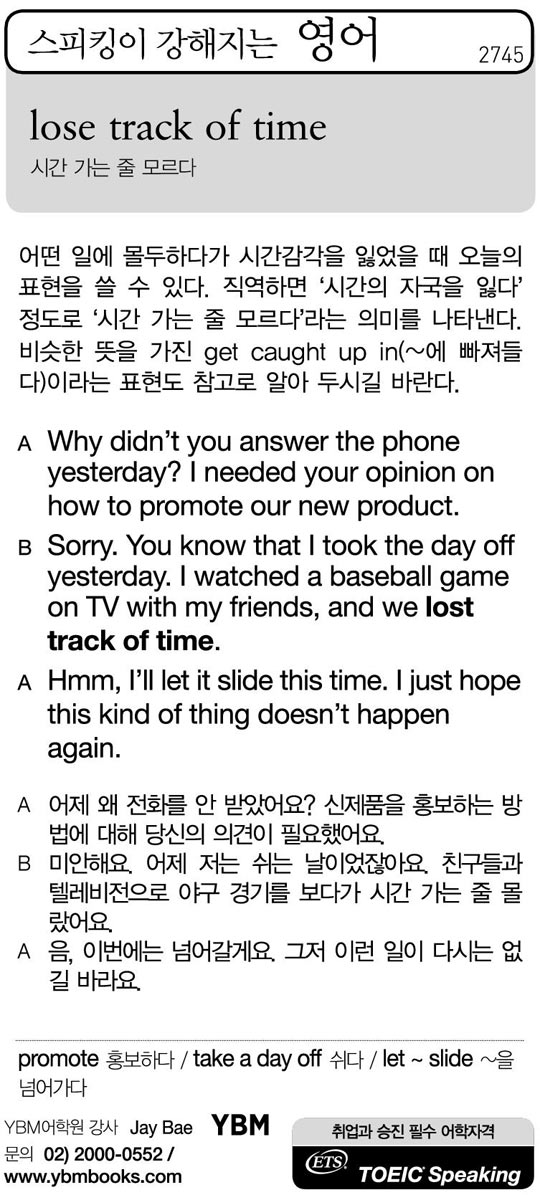
B: It's already nine? I guess I lost track of time.
A: Me too. We had a lot of fun today, didn't we?
B: We sure did! We should do this time more often.
A: 불꽃놀이 시간이 거의 다 됐다. 그걸 놓칠 순 없지.
B: 벌써 9시야? 시간이 어떻게 갔는지도 몰랐네.
A: 나도야. 오늘 우리 정말 재미있었다. 그러지 않았니?
B: 정말 그랬어! 좀 더 자주 이런 시간을 갖도록 하자.
W: I have to hand it to my husband.He really is a good driver.
M: Well, let me take your coats and please dig into the appetizers.
W: If you need me to pitch in, all you have to do is ask.
M: 늦을 거라고 하더니, 늦지 않게 오셨군요.
W: 우리 남편 덕분이죠.운전 실력이 워낙 뛰어나서요.
M: 자, 코트 이리 주고 전채요리부터 좀 드셔 보세요.
W: 제가 도울 일이 있으면 언제든 말씀만 하세요.
W: I’m pretty tied up today, but if it’s an emergency I’ll try to make time.
M: It’s about the Anderson firm we’ve been working on. We were planning on meeting at 7.
W: Oh, I think I’ll be able to make it. See you then.
M: 오늘 밤에 만날 시간 좀 있어요? 검토해야 할 일들이 있는데.
W: 오늘 좀 바쁜데, 그래도 긴급한 일이면 시간을 내볼게요.
M: 우리가 처리 중인 앤더슨 회사에 관한 일에요. 7시에 미팅하기로 했거든요.
W: 어, 갈 수 있을 것 같아요. 그럼 그때 보죠.
B: I am a mother, a wife, and also a manager at an advertising agency.
A: You must be busy everyday!
B: Yes. I make time to study English.
A: 무엇을 합니까, 줄리?
B: 저는 엄마이자 아내이고 광고 회사의 과장입니다.
A: 매우 바쁘시겠어요.
B: 네, 영어를 배우려고 시간을 일부러 냅니다.
A: It's my birthday tomorrow. Can you come to my birthday party?
B: I will make time to go.
A: 내일 내 생일이야. 생일파티에 올 수 있어?
B: 시간을 내서 갈게.
* She made some time to visit her grandparents last weekend. 지난 주말에 할머니와 할아버지를 방문할 시간을 내었어요.
* We should make some time to exercise regularly for our health. 우리 건강을 위해 규칙적으로 운동할 시간을 내야 해요.
* He made some time to relax and unwind after a long day at work. 긴 업무 끝에 휴식할 시간을 내었어요.
* It's important to make some time to pursue your hobbies and interests. 취미와 관심사를 쫓아갈 시간을 내는 것이 중요해요.
* I hope you can make time to visit Mom. 엄마한테 다녀갈 시간이 있으면 좋겠다.
* I hope you can make time to study a little more English. 네가 영어를 조금 더 공부할 시간이 있으면 좋겠다.
* In order to stay relevant in the industry, businesses need to constantly adapt and march with the times. 산업에서 항상 주목받으려면 기업들은 지속적으로 적응하고 시대의 흐름을 따라가야 합니다.
* As technology advances, it is crucial for individuals to embrace change and march with the times. 기술이 발전함에 따라 개인들은 변화를 받아들이고 시대의 흐름을 따라가는 것이 중요합니다.
* Traditional businesses that fail to march with the times often struggle to compete in the modern market. 시대의 흐름을 따르지 못하는 전통적인 비즈니스들은 현대 시장에서 경쟁력을 유지하기 어려워합니다.
* Successful entrepreneurs are those who have the vision to anticipate trends and march with the times. 성공한 기업가들은 트렌드를 예측하고 시대의 흐름을 따라가는 비전을 가지고 있습니다.
* It is essential for educational institutions to update their curriculum and teaching methods to ensure they march with the times. 교육 기관들은 시대의 흐름을 따라가기 위해 교육과정과 교수법을 업데이트하는 것이 중요합니다.
☆ mark time ① (일이) 진척되지 않다, 답보 상태에 있다. ② (사람이) 관망하다, (행동·활동을) 삼가다. ③ <군사> 제자리걸음하다.
* Are we on time? 우리 정시에 도착하는 건가요?
A: Yeah, I’m in the same boat. Hopefully, this time I will make it.


B: Kind of. We got lost when we were almost here.
A: Sorry to hear that. Take your time looking around. Feel free to let me know when you have any questions.
A: 해피 미술관에 오신것을 환영합니다. 찾는데 어려운 점이 있으셨나요?
B: 약간요. 거의 다 와서 헤맸어요.
A: 유감이네요. 천천히 시간을 가지고 둘러보세요. 궁금한 점이 있으시면 언제든 편하게 알려 주시고요.


M: Thanks for taking the time to see me, Mrs. Brown.
W: I'll let you know next week about our decision.
M: Thank you again and I look forward to hearing from you.Good-bye.
W: 존, 오늘 와 주셔서 고맙습니다.
M: 시간 내주셔서 감사합니다. 브라운 씨.
W: 결과는 다음주에 알려 드리겠습니다.
M: 다시 한 번 감사드립니다. 그럼, 연락 기다리겠습니다. 안녕히 계십시오.
B: Since the accident, he's had good days and bad.
A: He shouldn't rush things. Time heals all wounds.
B: That's what I said, but he's got no patience.
A: 탐이 어떻게 잘 회복되고 있대?
B: 사고 이후로, 좋은 날도 있고 그렇지 않은 날도 있는 것 같아.
A: 서두를 필요 없는데. 시간이 지나면 다 나을거야.
B: 내 말이 바로 그거야. 하지만 탐이 인내하지를 못하는 것 같아.
B: I think you're doing fine.
A: That's just your opinion.
B: And his opinion is just his.
A: Maybe you're right.
B: I think I am.
A: But will I get fired?
B: Only time will tell.
A: 팀장님은 내가 능력이 전혀 없다고 생각하셔.
B: 자넨 잘 하고 있는데.
A: 그건 자네 생각이고.
B: 그렇다면 팀장님 생각은 팀장님 생각일 뿐이야.
A: 자네 말이 맞을지도 모르지.
B: 내 말이 맞다니까.
A: 하지만 나 짤릴까?
B: 시간이 지나면 다 알게 되겠지.
<상업> 약정 기일에 지불해야 할, 정기의; 월부의, 분납의.
B: How can I do that?
A: Why don't you fill the bathtub with water, and practice.
B: Good idea. Time me.
A: Wow, you held your breath for 30 seconds
A: 물속에서 숨 안 쉬는 연습이 필요하겠다.
B: 어떻게 하지?
A: 욕조에 물을 채우고 연습하는 게 어때?
B: 좋은 생각이야. 시간 재줘.
A: 와, 30초나 했어.
…의 시간을 정하다; [사건·행동 따위]의 시간을 (얼마로) 정하다(for); …이 (…할) 때를 정하다[고르다, 예정하다](to do).
(시계의) 시간을 (…와) 맞추다(with); 《수동형으로》 (열차 따위의) 시간을 (…하도록) 조절하다[정하다](to do).
박자를 정하다; [스텝 따위]를 (…에) 맞추다(to).
…을 적시에 하다.
☑️ 숙어