용선로 (溶銑爐)
[Source: Serope Kalpakjian, Steven R. Schmid, Manufacturing Engineering and Technology]
★ cupola [야금] 큐폴라, 용선로(溶銑爐)(cupola furnace).
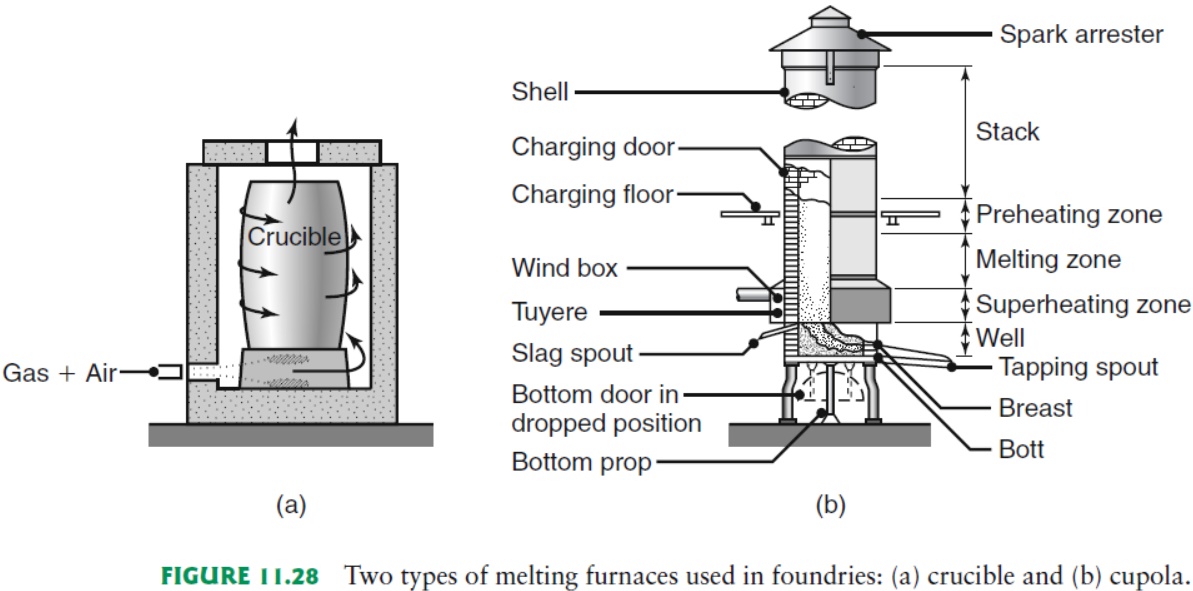
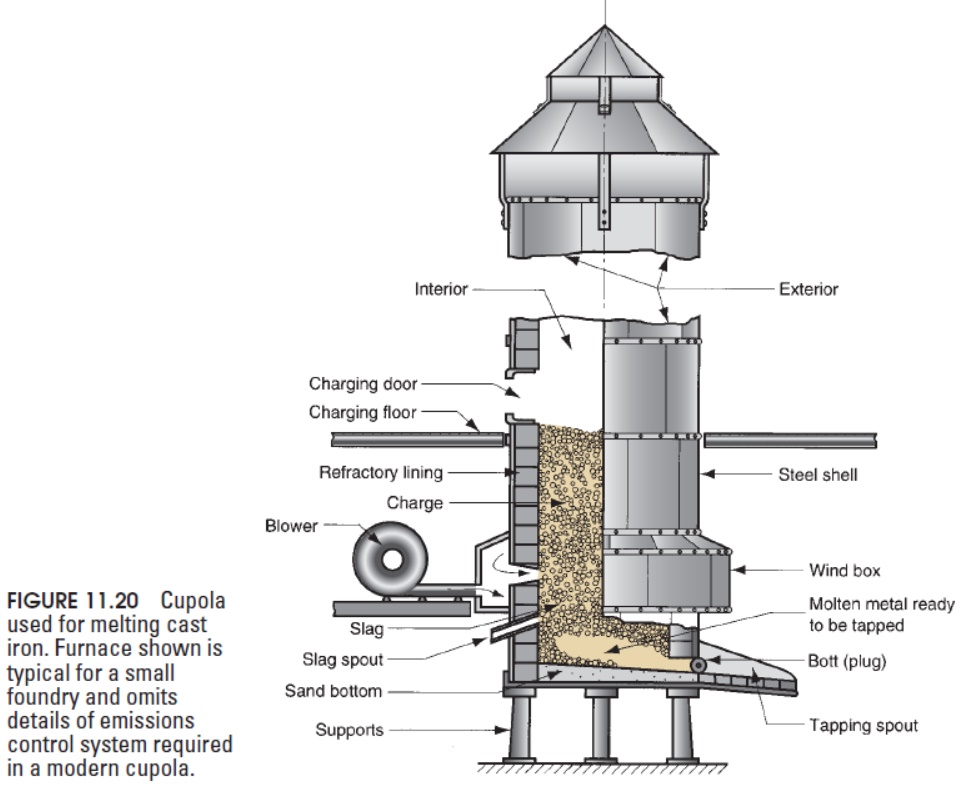
* A cupola is a vertical cylindrical furnace equipped with a tapping spout near its base. Cupolas are used only for melting cast irons, and although other furnaces are also used, the largest tonnage of cast iron is melted in cupolas. General construction and operating features of the cupola are illustrated in Figure 11.20. It consists of a large shell of steel plate lined with refractory. The “charge,” consisting of iron, coke, fl ux, and possible alloying elements, is loaded through a charging door located less than halfway up the height of the cupola. The iron is usually a mixture of pig iron and scrap (including risers, runners, and sprues left over from previous castings). Coke is the fuel used to heat the furnace. Forced air is introduced through
openings near the bottom of the shell for combustion of the coke. The flux is a basic compound such as limestone that reacts with coke ash and other impurities to form slag. The slag serves to cover the melt, protecting it from reaction with the environment inside the cupola and reducing heat loss. As the mixture is heated and melting of the iron occurs, the furnace is periodically tapped to provide liquid metal for the pour.
openings near the bottom of the shell for combustion of the coke. The flux is a basic compound such as limestone that reacts with coke ash and other impurities to form slag. The slag serves to cover the melt, protecting it from reaction with the environment inside the cupola and reducing heat loss. As the mixture is heated and melting of the iron occurs, the furnace is periodically tapped to provide liquid metal for the pour.
[출처: Mikell P. Groover, Fundamentals of Modern Manufacturing Materials, Processes, and Systems]