노골적이다
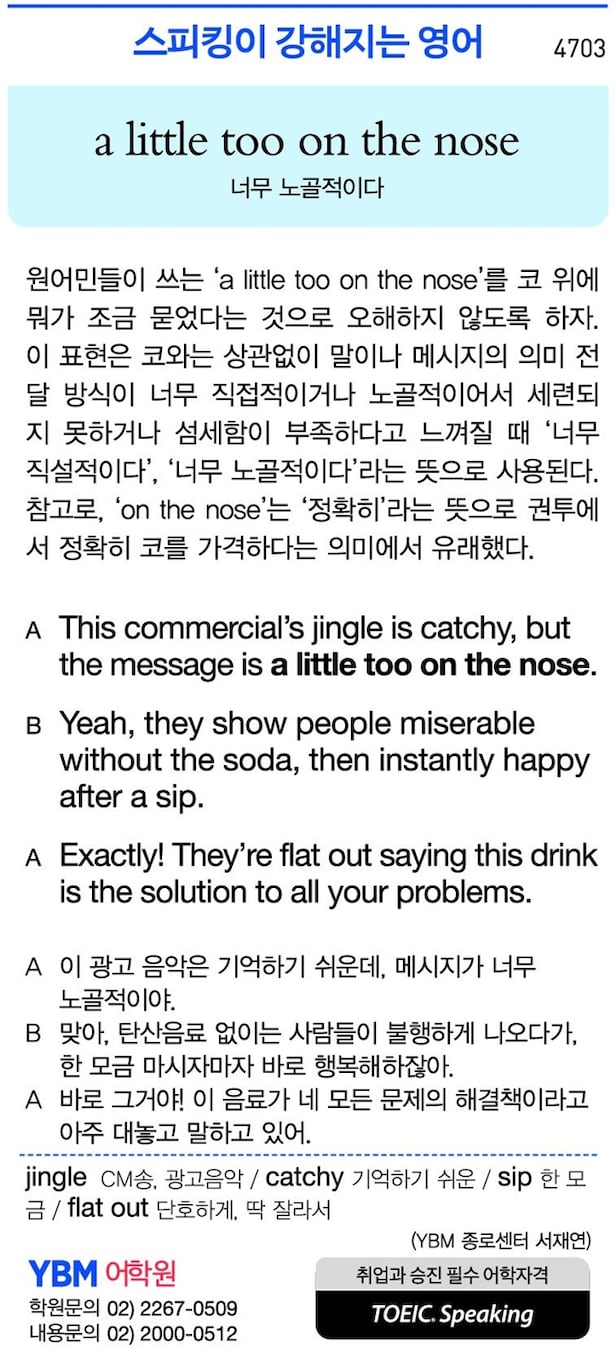
★ a little too on the nose 너무 노골적이다.
[뉘앙스] 어떤 것이 너무 직접적이고, 명백하며, 예상하기 쉽다는 뜻입니다. 은유나 미묘함 없이 메시지를 너무 분명하게 전달해서 오히려 재미없거나 효과가 떨어질 때 사용합니다. 이 표현은 주로 부정적인 뉘앙스로 사용되며, 미묘함이나 상상력을 자극하는 요소가 부족할 때 쓰입니다.
* The movie's message about climate change was a little too on the nose. 그 영화의 기후변화 메시지는 좀 너무 노골적이었어요.
* That line of dialogue was funny, but a bit on the nose. 그 대사는 웃기긴 했지만 좀 노골적이었어.
* The symbolism in that scene felt way too on the nose. 그 장면의 상징성은 지나치게 직접적이었어요.
* His comment about her weight was a little too on the nose. 그녀의 체중에 대한 그의 발언은 좀 너무 직설적이었어요.
* I liked the ad, but the slogan was a bit on the nose. 광고는 마음에 들었지만 슬로건은 좀 뻔했어요.
* Do you think this metaphor is too on the nose? 이 은유 표현 너무 노골적인 것 같지 않아?
* The joke worked, but it was a little on the nose for my taste. 농담은 통했지만, 내 기준엔 좀 노골적이었어.
* That title is a little too on the nose—can we make it subtler? 제목이 좀 노골적인데, 좀 더 은근하게 할 수 있을까?
* His attempt to show vulnerability felt too on the nose to be genuine. 그의 감정 표현은 너무 작위적으로 느껴졌어요.
* The political message was a bit on the nose, but it still made an impact. 정치적 메시지는 좀 노골적이긴 했지만, 여운은 있었어요.
A: What did you think of the ending?
B: Honestly? It was a little too on the nose for me.
A: 결말 어땠어?
B: 솔직히? 내 기준엔 좀 너무 노골적이었어.
A: Should we include that line in the speech?
B: I’d cut it—it feels too on the nose.
A: 그 문장 연설문에 넣을까?
B: 빼는 게 좋겠어. 좀 너무 직설적인 느낌이야.
A: I get what they were going for, but it was so on the nose.
B: Yeah, subtlety would’ve made it more powerful.
A: 무슨 말 하려는지는 알겠는데, 너무 뻔했어.
B: 맞아, 좀 더 은근했으면 오히려 더 강했을 텐데.
? 유의어 표현 비교
| 표현 | 의미 | 뉘앙스/사용상황 | 격식 | 예문 |
|---|---|---|---|---|
| on the nose | 너무 직설적이다 | 메시지나 표현이 너무 노골적일 때 | 비격식 | That metaphor is a bit on the nose. |
| too obvious | 너무 뻔하다 | 독창성 부족, 숨김 없음 | 중립 | The twist was too obvious. |
| heavy-handed | 지나치게 강압적이다 | 메시지 전달이 너무 억지스러움 | 중립 | The film’s message was heavy-handed. |
| lacks subtlety | 섬세함이 부족하다 | 표현이 조심스럽지 못하고 직설적 | 격식 | The argument lacks subtlety and nuance. |
| blunt | 직설적이다 | 감정 없이 날카롭게 말할 때 | 중립/비격식 | He’s too blunt with his feedback. |