전기로
★ electric furnace [제철] 전기로.
* The electric arc furnace accounts for about 30% of U.S. steel production. Although pig iron was originally used as the charge in this type of furnace, scrap iron and scrap steel are the primary raw materials today. Electric arc furnaces are available in several designs; the direct arc type shown in Figure 6.9 is currently the
most economical type. These furnaces have removable roofs for charging from above; tapping is accomplished by tilting the entire furnace. Scrap iron and steel selected for their compositions, together with alloying ingredients and limestone (flux), are charged into the furnace and heated by an electric arc that fl ows between large electrodes and the charge metal. Complete melting requires about 2 hours; tap-to-tap time is 4 hours. Capacities of electric furnaces commonly range between 25 and 100 tons per heat. Electric arc furnaces are noted for better quality steel but higher cost per ton, compared with the BOF. The electric arc furnace is generally associated with production of alloy steels, tool steels, and stainless steels.
most economical type. These furnaces have removable roofs for charging from above; tapping is accomplished by tilting the entire furnace. Scrap iron and steel selected for their compositions, together with alloying ingredients and limestone (flux), are charged into the furnace and heated by an electric arc that fl ows between large electrodes and the charge metal. Complete melting requires about 2 hours; tap-to-tap time is 4 hours. Capacities of electric furnaces commonly range between 25 and 100 tons per heat. Electric arc furnaces are noted for better quality steel but higher cost per ton, compared with the BOF. The electric arc furnace is generally associated with production of alloy steels, tool steels, and stainless steels.
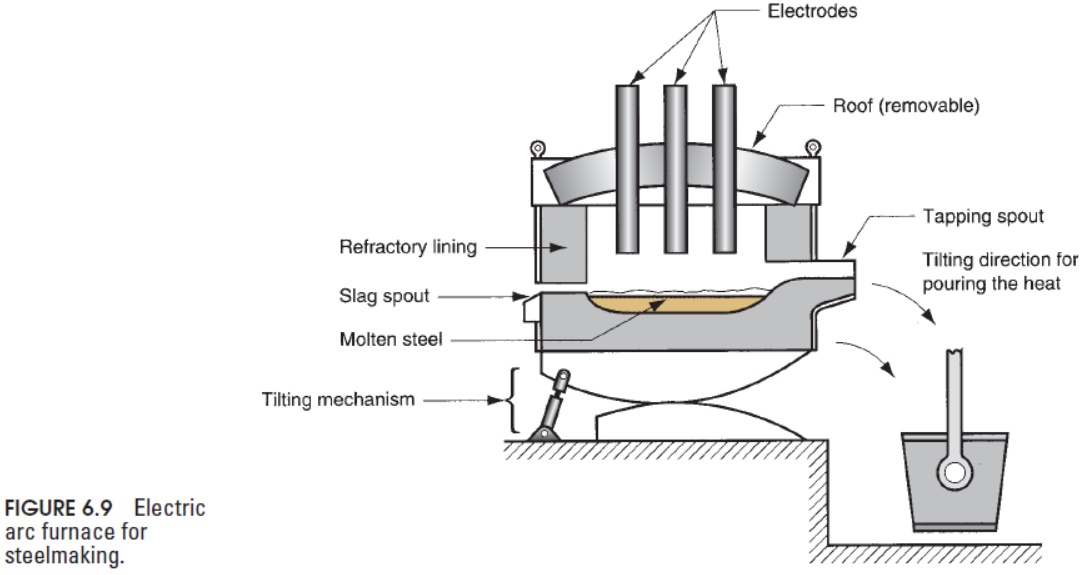
[출처: Mikell P. Groover, Fundamentals of Modern Manufacturing Materials, Processes, and Systems]
★ electric arc furnace (EAF)
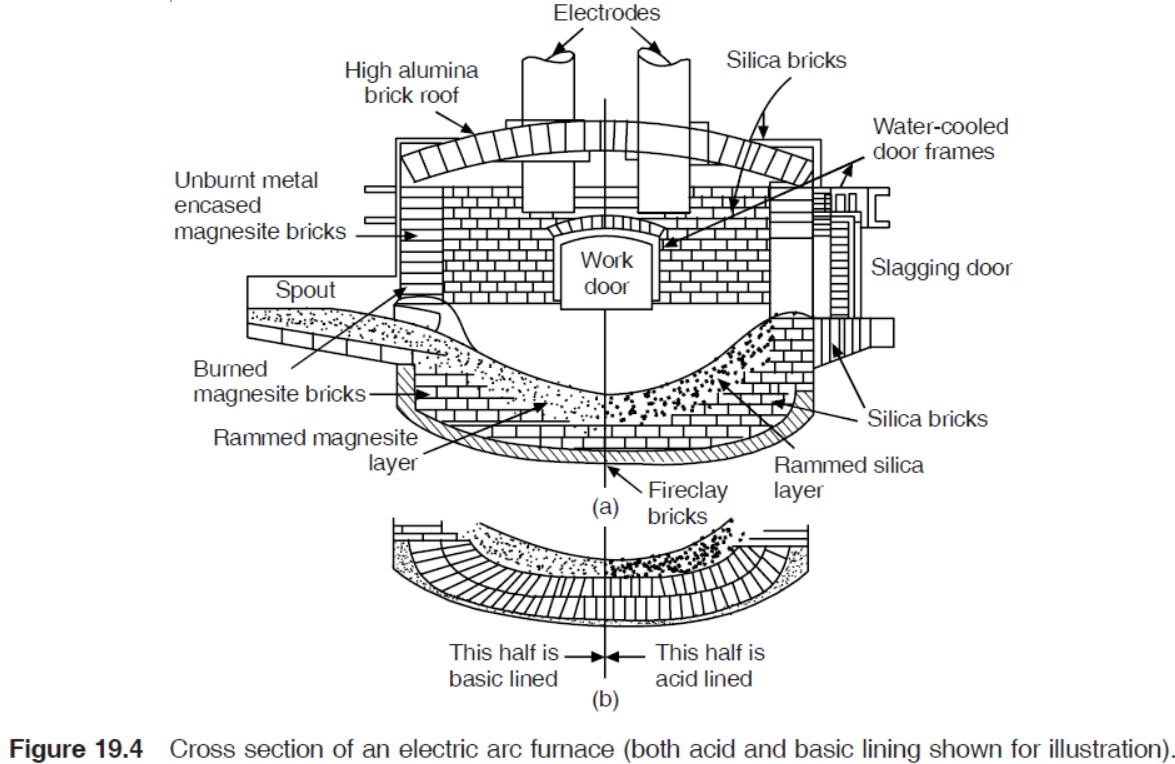
[출처: GHOSH, A. CHATTERJEE, A., IRON MAKING AND STEELMAKING THEORY AND PRACTICE]