전기화학 가공
★ electrochemical machining 전기화학 가공.
The basic process in this group is electrochemical machining (ECM). Electrochemical machining removes metal from an electrically conductive workpiece by anodic dissolution, in which the shape of the workpiece is obtained by a formed electrode tool in close proximity to, but separated from, the work by a rapidly fl owing electrolyte. ECM is basically a deplating operation. As illustrated in Figure 25.4, the workpiece is the
anode, and the tool is the cathode. The principle underlying the process is that material is deplated from the anode (the positive pole) and deposited onto the cathode (the negative pole) in the presence of an electrolyte bath (Section 4.5). The difference in ECM is that the electrolyte bath fl ows rapidly between the two poles to carry off the deplated material, so that it does not become plated onto the tool.
anode, and the tool is the cathode. The principle underlying the process is that material is deplated from the anode (the positive pole) and deposited onto the cathode (the negative pole) in the presence of an electrolyte bath (Section 4.5). The difference in ECM is that the electrolyte bath fl ows rapidly between the two poles to carry off the deplated material, so that it does not become plated onto the tool.
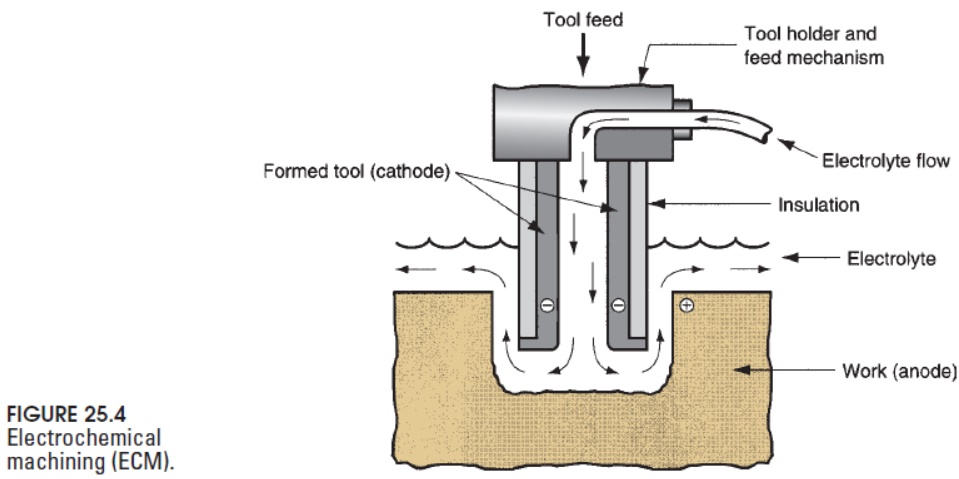
[출처: Mikell P. Groover, Fundamentals of Modern Manufacturing Materials, Processes, and Systems]