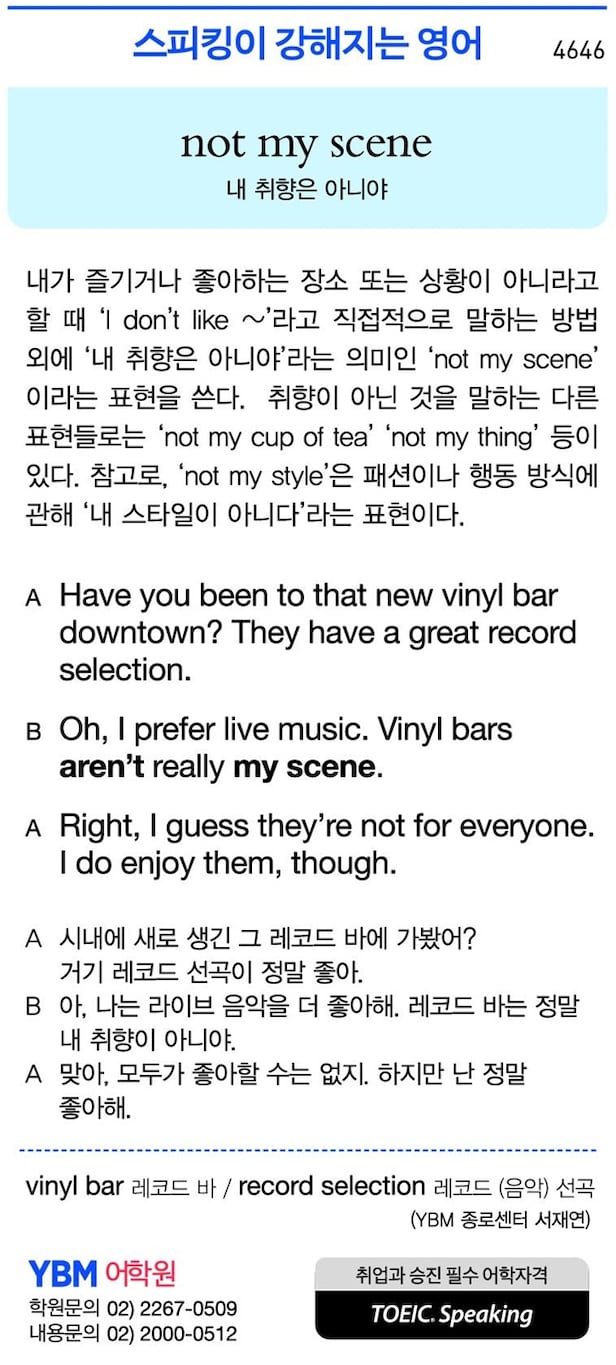
취향이 아니다
★ be not one's scene [입말]⋯의 취향이 아니다, ⋯가 좋아하는 바가 아니다
* He doesn’t go to dance clubs – they’re not really his scene. 그는 댄스 클럽에 가지 않는다. 그는 그런 곳을 좋아하지 않는다.
* Clubbing every weekend? That’s really not my scene. 매주 클럽 가는 거? 그건 진짜 내 취향 아니야.
* He’s into sports, but musicals just aren’t his scene. 그는 스포츠는 좋아하지만 뮤지컬은 전혀 취향이 아니야.
* Camping’s not really my scene—I prefer hotels. 캠핑은 내 취향이 아니야. 나는 호텔이 더 좋아.
* Loud parties just aren’t my scene. 시끄러운 파티는 그냥 내 스타일이 아니야.
* She tried hiking once but said it wasn’t her scene. 그녀는 하이킹을 한 번 해봤지만 자기 스타일이 아니라고 했어.
* That kind of fashion isn’t really my scene. 그런 스타일의 패션은 내 취향이 아니야.
* Jazz isn’t my scene, but I can appreciate good music. 재즈는 내 취향은 아니지만 좋은 음악은 인정해.
* I went to the art exhibit, but modern art isn’t my scene. 나는 미술 전시회에 갔지만 현대미술은 내 취향이 아니야.
* Politics is not my scene, so I try to stay out of it. 정치에는 별로 관심이 없어서 관여하지 않으려 해.
* He’s nice, but his crowd isn’t really my scene. 그는 괜찮은 사람이지만, 그가 어울리는 무리는 내 스타일이 아니야.
A: Are you coming to the club with us tonight?
B: Nah, that kind of place just isn’t my scene.
A: Fair enough. Maybe next time!
B: Nah, that kind of place just isn’t my scene.
A: Fair enough. Maybe next time!
A: 오늘 밤 우리랑 클럽 갈래?
B: 아냐, 그런 데는 내 취향이 아니야.
A: 알겠어. 다음에 보자!
B: 아냐, 그런 데는 내 취향이 아니야.
A: 알겠어. 다음에 보자!
A: Did you like the horror movie we watched?
B: Honestly, scary stuff isn’t really my scene.
A: Got it. Next time we’ll watch something lighter.
A: 우리가 본 그 공포 영화 어땠어?
B: 솔직히 말해서, 무서운 건 내 취향이 아니야.
A: 알겠어. 다음엔 좀 더 가벼운 걸 보자.
B: 솔직히 말해서, 무서운 건 내 취향이 아니야.
A: 알겠어. 다음엔 좀 더 가벼운 걸 보자.
A: Everyone’s going camping this weekend. You in?
B: Camping’s not really my scene. I prefer hotels and soft beds.
A: Haha, fair enough.
A: 이번 주말에 다들 캠핑 가는데, 너도 갈래?
B: 캠핑은 별로 내 취향이 아니야. 나는 호텔이랑 포근한 침대가 좋아.
A: 하하, 그렇지~ 이해돼.
B: 캠핑은 별로 내 취향이 아니야. 나는 호텔이랑 포근한 침대가 좋아.
A: 하하, 그렇지~ 이해돼.
★ It's not for me. 그건 내 취향이 아니야.
★ That's not my cup of tea. 내 스타일(취향)이 아니다.
사람이나 물건 혹은 스타일 등이 자신의 취향과 맞지 않을 때, ‘그건 내 취향/스타일이 아니다'라는 표현을 자주 사용합니다. 영어로는 that's not my cup of tea라고 하는데요, 여기서 cup of tea는 자신의 취미나 기호에 맞는 사람이나 물건 등을 의미하기 때문에 부정어 not과 함께 쓰여서 자주 사용되는 좋은 표현입니다.
A: Would you like to go to see a horror movie tonight?
B: I don't like horror movies. That's not my cup of tea.
A: 오늘 저녁 공포영화를 보러 가시겠어요?
B: 저는 공포영화를 좋아하지 않아요. 제 취향이 아니에요.
★ It wasn't for me. 내 취향은 아니었어.
A: How did you spend your weekend? Did you do anything fun?
B: I went to a baseball stadium for the first time in my life. My girlfriend had tickets.
A: Did you have a good time? I love going to baseball stadiums.
B: It wasn't for me. It was noisy, and the weather was too hot.
A: 주말은 어떻게 보냈어? 무슨 재미있는 일 없었어?
B: 난생 처음으로 야구장에 가 봤어. 여자 친구한테 표가 있어서.
A: 재미있었어? 난 야구장에 가는 것 정말 좋아하는데.
B: 내 취향은 아니었어. 시끄러운데다 날씨도 너무 더웠어.
★ It's not my thing. 별로 내 취향이 아니야.
A: We're going to go out for lunch today. Do you want to come?
B: What are you going to eat? Have you decided?
A: We're going to get Jeonju-style bean sprout soup.
B: No thanks. I don't like dishes with bean sprouts. It's not my thing.
A: 오늘 점심 나가서 먹을 건데. 너도 갈이 갈래?
B: 뭐 먹을 거야? 결정했어?
A: 전주식 콩나물 국밥 먹으러 가게.
B: 난 됐어. 콩나물 들어간 음식은 안 좋아하거든. 별로 내 취향이 아니야.
