혼자서
★ alone (…의 점[면]에서) 혼자의, 단지 …만의, 고독한(in); (외롭게) 혼자서, 홀로
* You don't live in a world all alone. Your brothers are here too. 당신은 이 세상에서 혼자 사는 것이 아닙니다. 당신의 형제들도 있습니다. Albert Schweitzer(의사 선교사, 1875-1965)
* I want to be alone. 혼자 있고 싶다.
* She and I were alone in the room. 방에는 그녀와 나만이 있었다.
* I was alone for the first time in my life. 내 생애 처음으로 홀로 떨어져 있었다.
☆ all alone 완전히 혼자서, 정말 외로운.
* She was all alone in a strange city. 그녀는 낯선 도시에서 완전히 혼자였다.
* It was scary being all alone in a strange house.
☆ alone in the world 완전히 홀로인.
☆ feel alone 혼자라고 느끼다, 고독함을 느끼다
★ (all) by oneself (다른 사람 도움 없이) 혼자서, 혼자 힘으로, 스스로.
* Don’t try to lift the couch all by yourself. 소파를 당신 혼자서 들려고 하지 마세요.
* Mark is old enough to travel on an airplane by himself.
* Did you make that whole thing all by yourself?
★ in isolation 고립하여, 격리되어, 떼어놓고, 분리하여(= if someone does something in isolation, they have chosen to do it alone and with no help from anyone else)
* The tribe now lives in isolation, keeping hold of its traditions.
* Any of these groups could, working in isolation, do the job efficiently.
★ in private 혼자서, 누구의 방해도 받지 않고
★ on one's own 저절로, 혼자서, 단독으로(= doing something alone and without the help of anyone else)
* I picked up snowboarding on my own. 나는 스노보드를 혼자서 익혔다.
* She was able to walk on her own again. 그녀는 다시 혼자 걸을 수 있게 되었다.
* These tests are hard to prepare for on one's own.
* Sometimes, I like to travel on my own.
* He always eats lunch on his own.
* People also drink on their own quite often.
* I couldn't finish the work on my own.
* You should try to do it on your own before asking for help.
* After her husband left her she had to bring up the children on her own.
* The wardrobe is too heavy to move on my own.
☆ all on one's own 스스로, 혼자서
* After just three months of lessons, I was able to complete my first song, all on my own. Of course, the process required a lot of hard work, but I've never felt so proud of myself. I now have a new dream of releasing an album of my own someday. 레슨을 받은 지 불과 3개월 만에, 나 혼자서 첫 곡을 완성시킬 수 있었다. 물론 작업 과정은 많은 노력이 필요했지만, 그 어느 때보다 뿌듯함을 느꼈다. 이제는 언젠가 나만의 앨범을 발매하겠다는 새로운 꿈도 생기게 되었다.
★ single-handed {항상 +명사} 혼자 힘으로 하는, 단독의
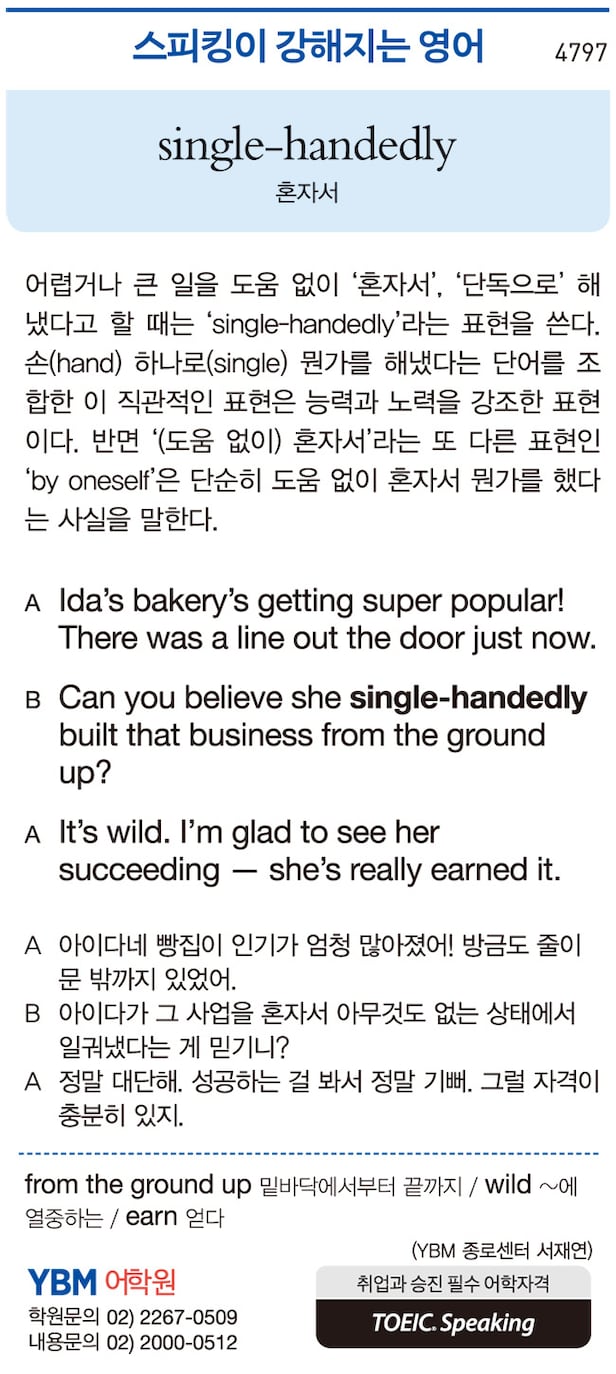
★ single-handedly 혼자 힘으로, 단독으로(= if you do something very difficult or very impressive single-handed or single-handedly you succeed in doing it without the help of anyone else)
* almost single-handedly 거의 (자기) 혼자서.
* When grandpa talks about the war he makes it sound as if he won it single-handed.
* Hitchcock single-handedly changed the face of modern cinema.
★ solo 혼자서(= if you do something solo, especially a sporting or musical activity, you do it alone)
우리나라에서는 '솔로'를 배우자나 연인이 없는 사람을 뜻하는 말로도 많이 사용하지만, 영어권에서는 그런 경우에 single이라는 단어를 사용하는 것이 자연스럽다.
* I don't mind eating solo. 난 혼자서 식사하는 것도 마다하지 않는다.
* Lots of single people gather here every Friday. 금요일마다 많은 싱글족들이 이곳에 모인다.
* She was the first woman to sail solo across the Atlantic Ocean.
☆ go solo (= start doing something on your own)
* John played with the band for five yeai's before going solo.
* He made a solo attempt to climb Mount Everest.
★ unaided 도움을 받지 않은, 보조를 받지 않은(= if you do something difficult unaided you do it without the help of anyone or anything)
* After his illness he was unable to walk unaided.
* With no one else in the office I had to deal with the problem unaided.
* She can no longer walk unaided. 그녀는 이제 도움 없이는 혼자 걸을 수 없다.