눈치채다
★ catch on 눈치채다.
* Let's leave before they catch on. 그들이 눈치채기 전에 나가자.
A: I got rid of a lot stuff I don't use at home.
B: Oh, I see. Good for you!
A: But they were items that my wife was against throwing away.
B: Really?
A: Yes. I don't think she has caught on. It just goes to show that she doesn't even know about all the things we don't use.
B: Well, I suppose that might be true.
A: 집에서 안 쓰는 물건을 많이 내다 버렸어요.
B: 아, 그러셨어요. 잘하셨어요!
A: 그런데 아내는 버리는 것에 반대했던 물건들이에요.
B: 정말요?
A: 네. 눈치채지는 못한 것 같아요. 사용하지 않은 물건들의 존재도 인지하지 못한다는 반증 같아요.
B: 아이고, 그럴 수도 있겠네요.
★ catch wind of ...을 눈치채다.
* My husband must have caught wind of how I felt.
* I caught wind of what he was doing.
* Let's leave before they catch wind of what we're doing.
★ figure (something) out 눈치채다
A: You haven't figured it out yet, have you?
B: Figure what out?
A: You're so dense. Mr. Kim is totally in love with you. The whole company knows.
A: 아직도 눈치 못 겠어요?
B: 무슨 눈치요?
A: 왜 그렇게 둔해요? 미스터 김이 당신을 얼마나 좋아하는데. 회사에서 모르는 사람이 없어요.
★ get the message [입말] 의도를 눈치 채다, 속뜻을 파악하다.
* Hopefully he’ll get the message and leave me alone. 그가 눈치 채고 날 그냥 내버려뒀으면 한다.
★ have an inkling 언뜻 보거나 들어서 눈치채다
* They had an inkling that he really could leave the company. 그들은 그가 정말로 회사를 그만 둘 수도 있다는 눈치를 챘다.
* I had an inkling that something was going on. 나는 뭔가 일이 벌어지고 있다는 눈치를 챘다.
★ notice (that)
* I noticed that her hands were shaking. 나는 그녀의 손이 떨리고 있는 것을 눈치챘다.
* She hadn’t noticed before how tired he looked. 전에 그녀는 그가 얼마나 피곤해 보이는지 미처 눈치 못 챘었다.
★ Have you noticed ...한 거 눈치챘어요? ...한 거 알아챘어요?
A: Have you noticed the change in weather? 날씨 변화한 거 느끼니?
B: It's a lot chillier at night. 밤 되면 훨씬 쌀쌀하더라고.
A: Have you noticed any improvement? 향상된 점은 모르겠나요?
B: In very small increments, yes. 아주 조금 나아진 것 같긴 해요.
A: Have you noticed anything unusual? 이상한 건 없던가요?
B: Nothing I can put my finger on. 딱 꼬집어 말할 만한 건 없는데요.
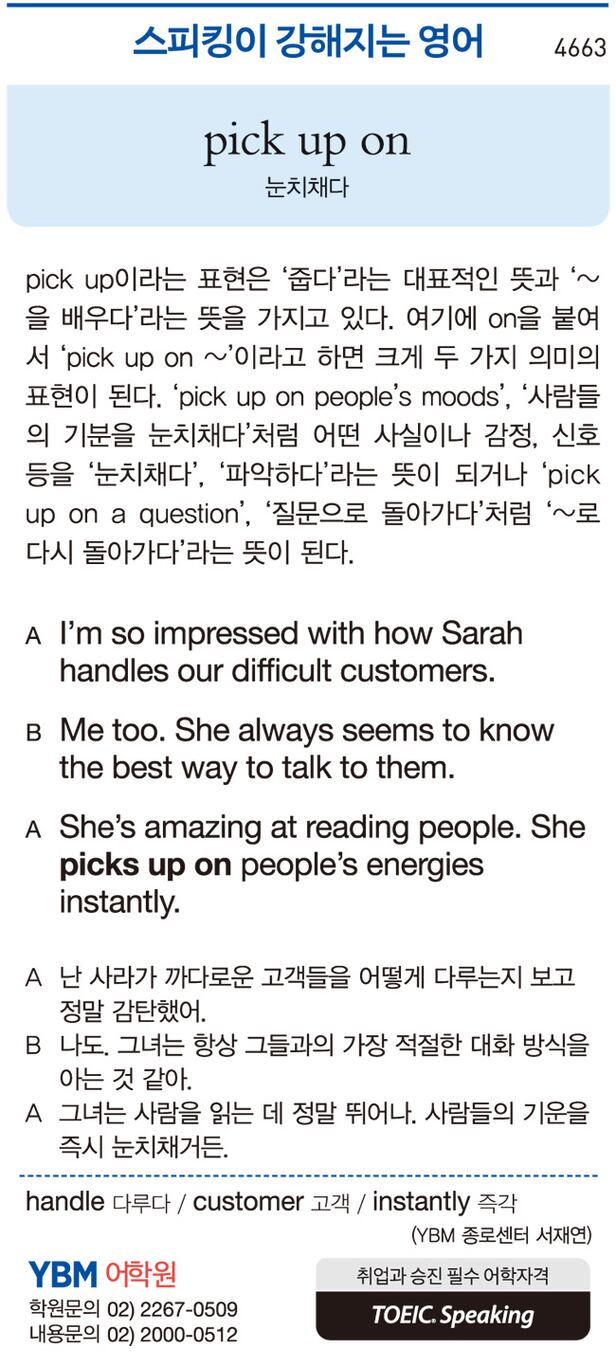
★ pick up on (something) (분위기, 기분 등)을 눈치 채다.
* Did you pick that subtle smile up on her face?
★ take a hint 눈치채다, 깨닫다, 알아차리다
* Nancy flirted with Ted for days, and she finally said, "Can't you take a hint? I like you, you dummy!" 낸시는 며칠동안 테드와 시시덕거렸고 마침내 말했다. "넌 그렇게 눈치가 없니? 나, 너 좋아한단 말야. 이 멍청아!"
* OK,OK! I can take a hint! No one wants me here, so I'm leaving! 좋아, 좋다고! 알겠어! 여기 있는 사람 아무도 날 원하지 않는구나. 그럼 난 가겠어!
A: He has not been promoted for the last ten years. And he still works there. I guess he is one of those people who can't take hints.
B: It's not that he can't take hints. He just can't afford to quit that job.
A: 그는 지난 10년 동안 진급을 못하고 아직 거기서 일하고 있어. 눈치없는 사람 중의 한사람인 것 같아.
B: 눈치가 없는게 아니라 직장을 그만둘 형편이 못돼서 그런 거야.